
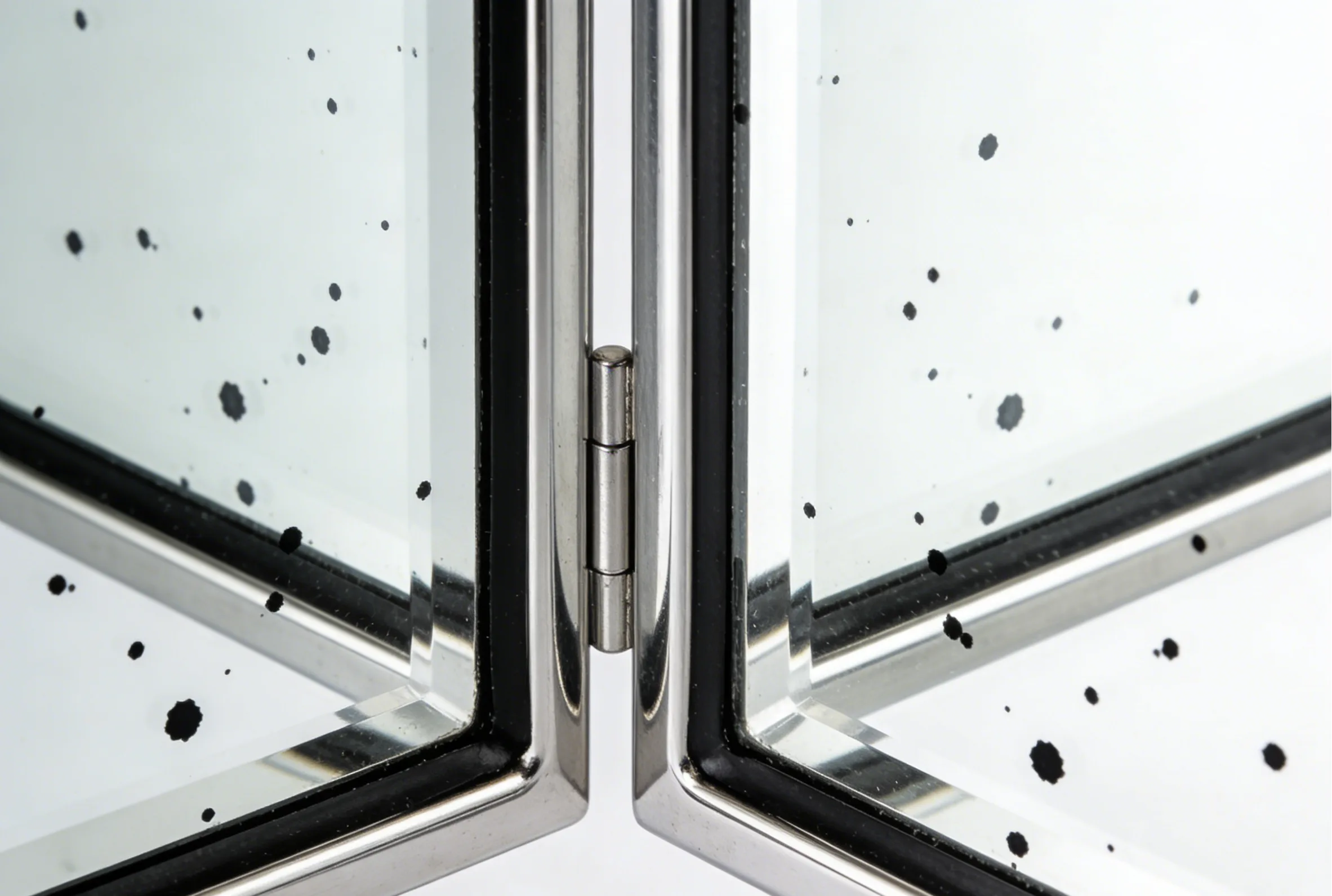
A lighted medicine cabinet mirror is a common feature in modern bathrooms and commercial projects because it combines reflection, lighting, and storage in one unit. But when the mirror starts to show black spots, dark edges, or a general “blackening,” it undermines both function and appearance — and for B2B buyers that can mean additional maintenance costs or early replacement.
This article explains the main causes, realistic fixes, prevention steps, and how to choose a reliable custom medicine cabinet mirror supplier — with practical, manufacturer-focused advice you can use on specs and procurement.
1. Quick Answer
Most blackening on medicine cabinet mirrors is desilvering — the breakdown of the mirror’s reflective backing caused by moisture, chemicals, or poor sealing. In many cases the underlying glass remains fine but the reflective layer has been compromised; fixing this permanently usually means replacing the mirror or the mirror panel with higher-grade materials (for example, copper-free mirror glass:
https://aosmay.com/2025/10/27/bright-bathroom-led-mirror-cabinet-copper-free-silver-mirror/
) and improving sealing and cabinet design.
2. Why does a Lighted Medicine Cabinet Mirror Turn Black?
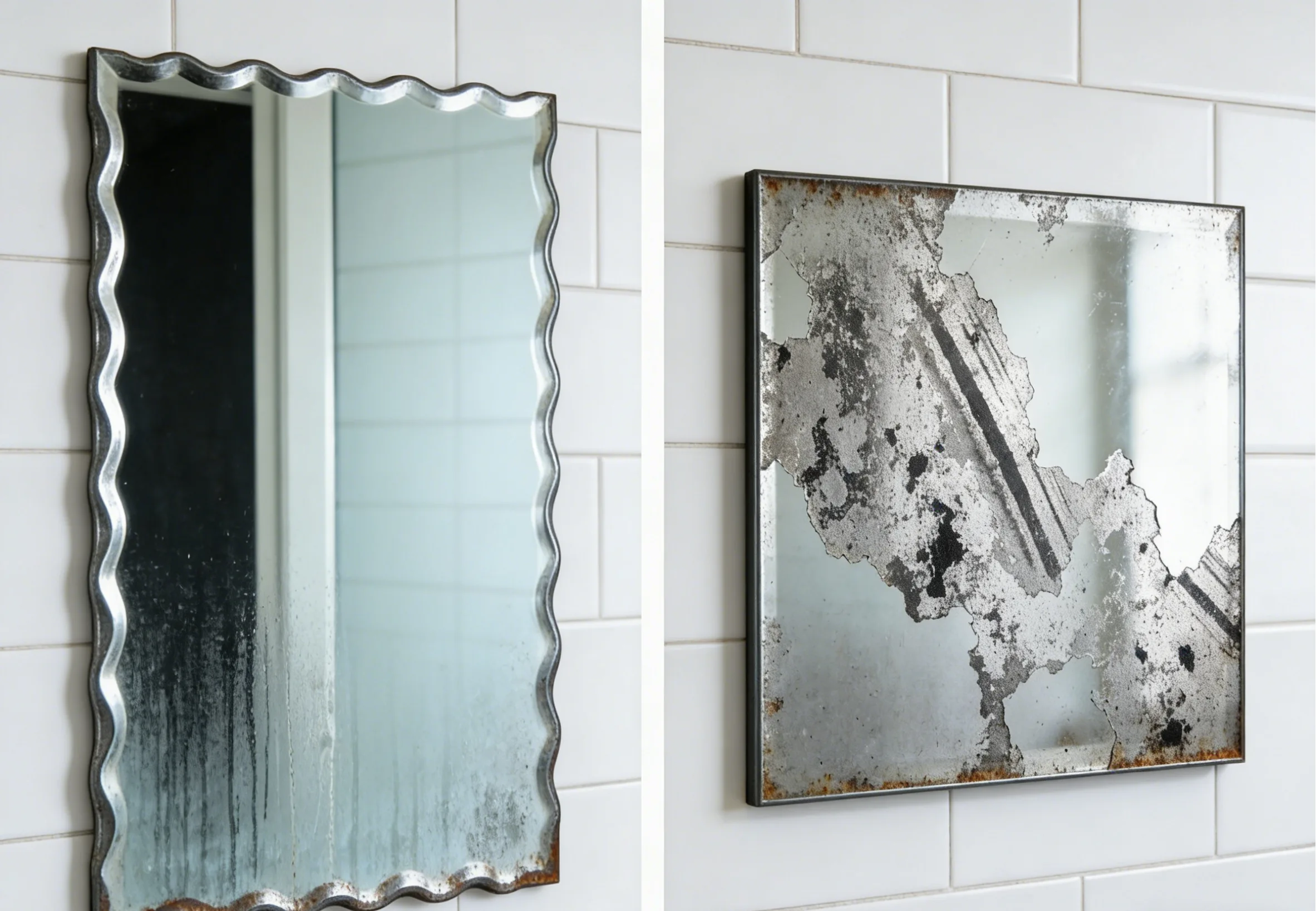
A mirror becomes reflective because a thin metallic layer (traditionally silver over copper) is bonded to the back of the glass. Over time, that metal layer can oxidize, tarnish, or separate from the glass — a process commonly called desilvering or “mirror rot.” In bathrooms, warm humid air, cleaning chemicals, or leaking seals accelerate this deterioration and cause black spots or dark edges to appear.
3. Common Causes
- Desilvering (backing layer failure)
The reflective metal layer can corrode or peel away where it’s exposed to moisture or air — especially at the edges — producing black or brown patches. This is the single most frequent cause.
- Moisture ingress and poor sealing
If a medicine cabinet isn’t sealed properly (back panel gaps, poor gasketing, or holes for lights/wiring that aren’t water-tight), bathroom humidity and splashes can reach the mirror backing and start the corrosion process.
- Harsh cleaning chemicals and vapors
Ammonia-based cleaners, acidic cleaners, or even aerosol residue can attack the mirror backing over time and accelerate blackening.
- Low-quality materials or manufacturing shortcuts
Thin protective primers, use of copper layers, weak edge protection, or insufficient paint/coating on the mirror backing reduce longevity. Many higher-end manufacturers avoid copper layers or use improved primers to reduce this risk.
4. Can you Fix a Blackening Mirror? Realistic Options
Short answer: partial fixes exist, but full restoration of desilvered areas is usually not practical or cost-effective for commercial projects. Options:
Edge paint or sealing (temporary): Painting the back edges or re-sealing gaps can slow further spread but won’t restore lost reflection. Good short-term measure to stall damage.
Mirror replacement: For B2B projects (hotels, apartments, clinics), replacing the mirror panel with a higher-grade panel (e.g., copper-free mirror glass) is the long-term solution.
Replace with framed or encapsulated units: Installing mirrors with full frames or encapsulated backs reduces edge exposure and is a common preventive retrofit.
5. How to Prevent Mirror Blackening
For B2B buyers specifying lighted medicine cabinet mirror units, include these requirements in your RFQ and specs to reduce risk:
- Use copper-free or low-copper mirror glass — these have better corrosion resistance in humid environments.
- Specify sealed wiring and integrated demister pads — demisters reduce condensation on the glass surface and sealed wiring prevents moisture entry near the backing.
- Edge protection and encapsulation — sealed backs, full back-painted primers, and protective frames reduce edge exposure.
- Certifications & test reports — ask for corrosion resistance tests, IP or splash ratings for cabinets (e.g., IP44 where appropriate), and evidence of quality control.
- Approved cleaning guidance — include a recommended cleaning procedure (no ammonia, mild detergents only) for maintenance contracts.
These preventive specs turn an ordinary lighted medicine cabinet mirror into a product suited for commercial, high-humidity environments.
For example, this Aosmay lighted medicine cabinet is a mirror cabinet that meets the above requirements.
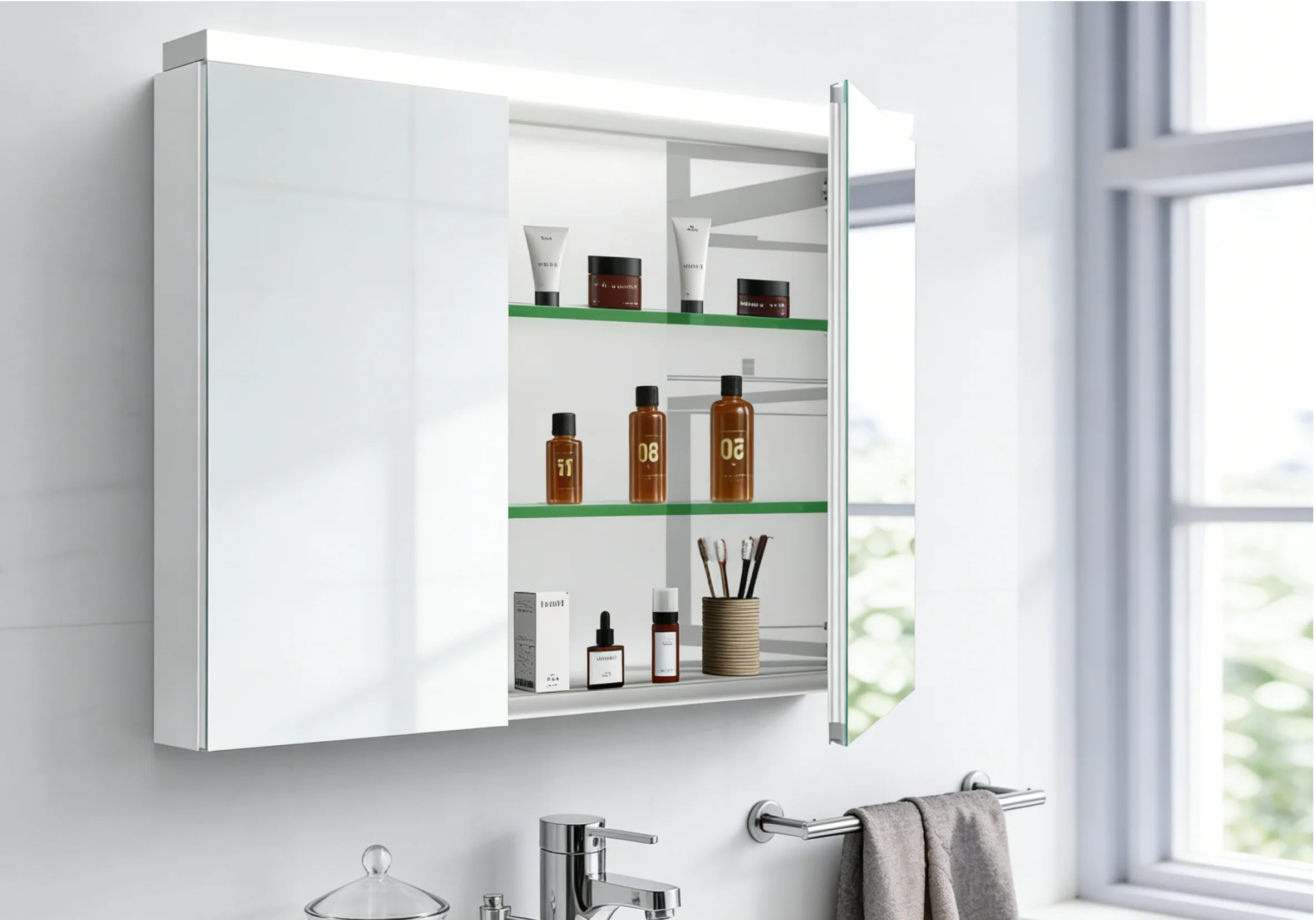
31×25 Inches Two Door Medicine Cabinet with LED Light
https://aosmay.com/product/31×25-inches-two-door-medicine-cabinet-with-led-light/
6. How to Choose a High-quality Custom Medicine Cabinet Mirror
When evaluating suppliers, treat the supplier like a technical partner, not just a vendor. Key evaluation points:
Material specs: Copper-free or improved silvering, thickness of glass, backing paint system.
Sealing & assembly: How is the mirror fixed to the cabinet? Are wiring penetrations sealed? Is there a demister option?
Customization capabilities: Can the supplier provide OEM/ODM sizes, integrated lighting options, and project-level documentation?
Quality & testing: Ask for sample test reports, IP ratings for the cabinet, and long-term corrosion resistance evidence.
After-sales and spare parts: For hospitality and large builds, ensure availability of replacement mirror panels and service support.
As an example of a manufacturer that integrates these considerations into product design, Aosmay offers configurable cabinet options and can produce custom medicine cabinet mirror solutions with improved sealing, copper-free mirror options, and integrated LED lighting suited for hotels and multi-unit residential projects. (Click to Learn More About Aosmay medicine cabinets: https://aosmay.com/mirror-cabinet/)
7. Installation & Maintenance Tips
- Install medicine cabinets away from direct water spray and ensure wall penetrations are waterproofed.
- Use neutral, non-ammonia cleaners and follow manufacturer cleaning recommendations.
- Include maintenance inspections in building service schedules to detect early edge dampness and reseal as needed.
- For retrofit projects, consider framed or encapsulated mirror panels rather than exposed edges.
8. FAQ
Q: Why are there black spots only at the edges?
A: Edges are where the backing is most exposed (cut glass, seal gaps), so moisture and chemicals reach the metal backing first and cause desilvering.
Q: Can I repair desilvering myself?
A: You can slow progress with edge paint or resealing, but restoring lost reflective backing is generally not possible; replacement is the reliable commercial fix.
Q: Are LED mirrors more likely to blacken because of heat?
A: Modern LED modules run cool; the bigger risk is moisture and poor sealing near electrical fixtures, not LED heat itself. Specify sealed cable entries and integrated demisters to reduce risk.
Q: What mirror type lasts longest in bathrooms?
A: Copper-free silver mirrors with robust back-paint primers and good edge encapsulation typically last longer in humid environments.
9. Conclusion
Blackening on a lighted medicine cabinet mirror is usually a symptom of backing corrosion (desilvering) caused by moisture, chemicals, or poor sealing. For commercial projects, focus procurement on material specs (copper-free or improved silvering), cabinet sealing, demisters, and vendor testing. Treat suppliers as technical partners: demand sample test data, clear maintenance guidance, and spare-part availability. These steps will reduce lifecycle cost and avoid frequent mirror replacements.
- Contact Aosmay directly to customize pharmaceutical cabinets that meet the above requirements: https://aosmay.com/contact/