
Quick Answer
Mirror manufacturing experience matters because preventing mirror defects requires consistent control over glass quality, cutting, edge processing, coating protection, inspection, and packaging. For wholesalers, bathroom accessory retailers, contractors, and hotel project buyers, an experienced manufacturer may be better equipped to identify recurring production risks and establish preventive controls.
However, years in business alone do not guarantee product quality. Buyers should evaluate a manufacturer’s actual inspection procedures, defect records, material specifications, and packaging validation before placing bulk orders.

24×24 Inches LED Round Mirror Mirror Hangs Black Metal Framed
1. What Are the Most Common Mirror Defects?
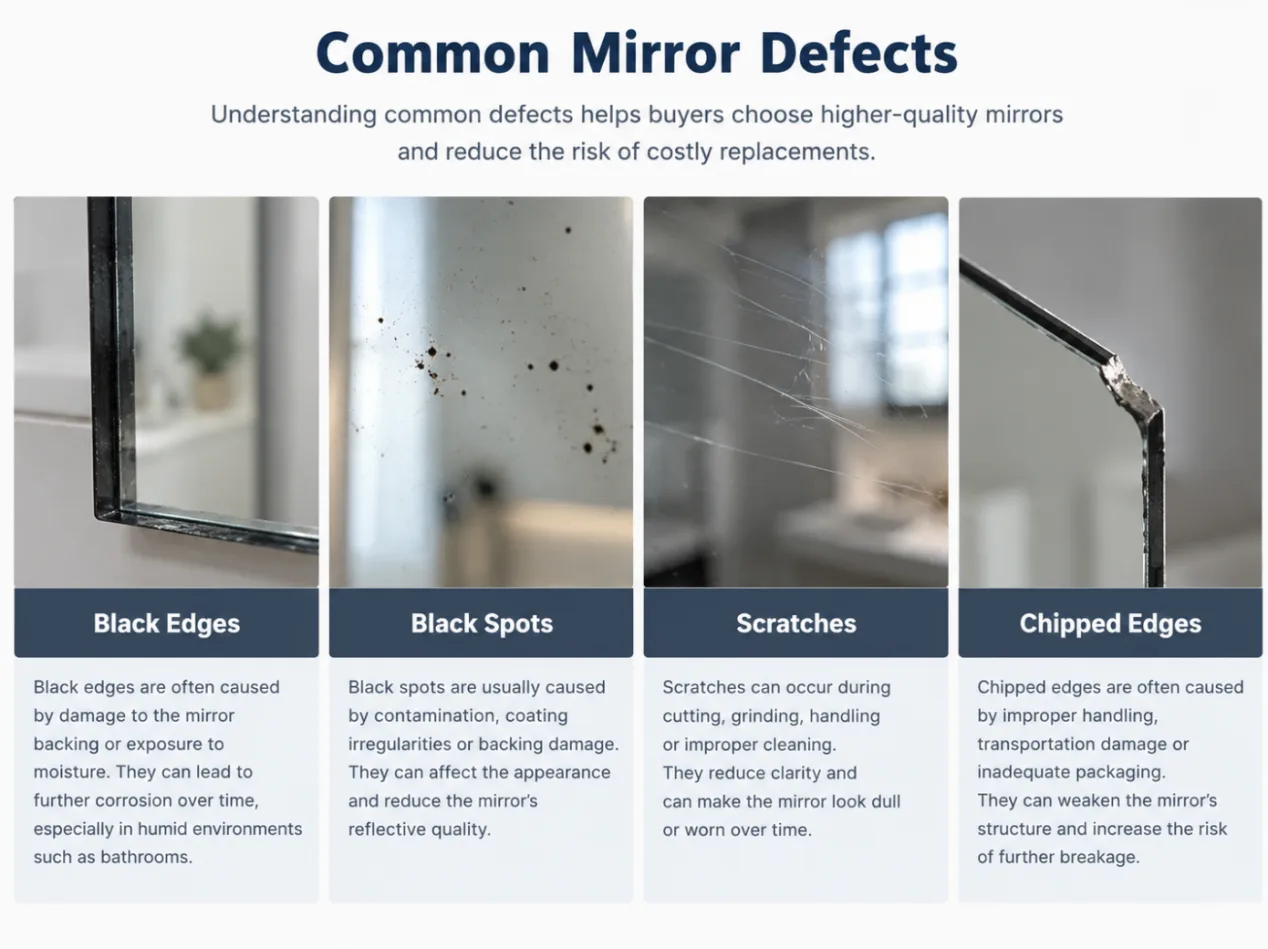
Mirror defects can affect appearance, durability, installation quality, and customer satisfaction. The most common issues include:
Mirror defect | Possible causes | What buyers should check |
Black edges or edge corrosion | Damaged mirror backing, moisture exposure, or unsuitable edge processing | Edge condition and corrosion-resistance evidence |
Black spots or coating blemishes | Contamination, coating irregularities, or backing damage | Surface cleanliness and reflective-layer inspection |
Scratches and chips | Improper handling, cutting, grinding, or packaging | Surface inspection and edge quality |
Image distortion | Glass flatness or optical-quality problems | Reflection consistency across the mirror |
Peeling or coating damage | Poor adhesion or damage to protective layers | Coating integrity and relevant test results |
Breakage during transport | Inadequate cushioning or unsuitable packaging | Packaging design and transit-test evidence |
The International Organization for Standardization’s ISO 25537 addresses optical, visual, edge, and protective-coating faults, as well as durability testing for specified silvered flat-glass mirrors.
For buyers, understanding these defects is the first step toward developing clear product acceptance criteria.
2. How Does Manufacturing Experience Help Prevent Mirror Defects?
Better Control of Glass Cutting and Edge Processing
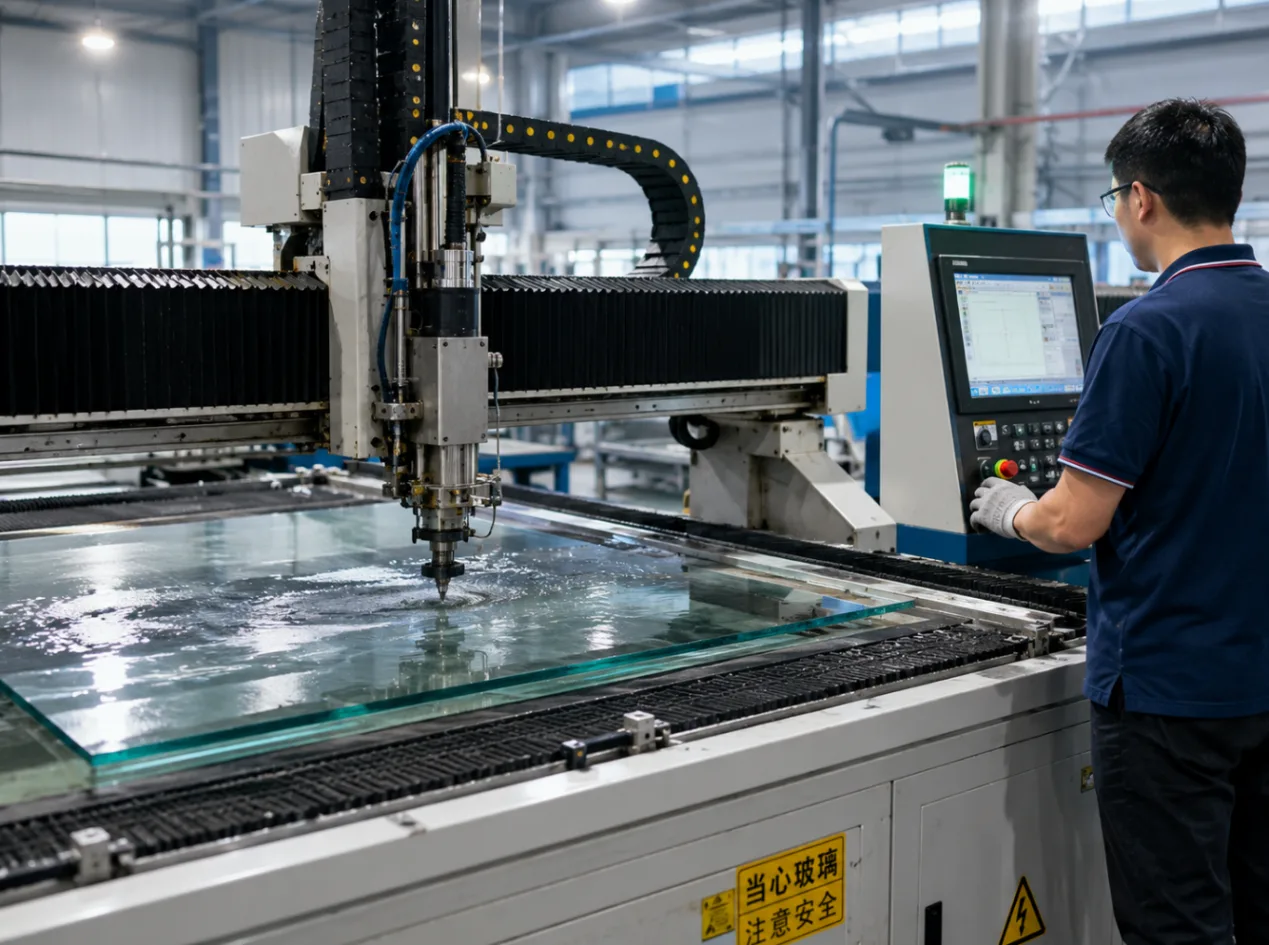
Cutting, grinding, and polishing can affect both the visible edge and the integrity of a mirror’s backing. Improper processing or contamination may increase the risk of edge damage and subsequent deterioration.
Experienced production teams can establish consistent handling procedures, maintain clean work areas, and monitor edge-processing conditions.
The objective is not simply to produce a mirror that looks acceptable when it leaves the factory. It is to reduce avoidable damage throughout manufacturing and handling.
2.1. More Consistent Surface and Coating Inspection
Small scratches, spots, and coating irregularities can become significant when hundreds of mirrors are installed across a hotel or residential development.
An established inspection process should define acceptable appearance, inspection conditions, defect locations, and rejection criteria.
For example, a buyer may require stricter acceptance criteria for defects in the central viewing area than for minor imperfections near a concealed edge. These requirements should be agreed upon before production rather than decided after delivery.
2.2. Better Understanding of Moisture-Related Risks
Bathrooms expose mirrors to humidity, condensation, and cleaning chemicals. If moisture reaches vulnerable edges or damages protective layers, deterioration may occur.
Manufacturers should understand the relationship between edge processing, backing protection, material selection, and the intended installation environment.
For LED bathroom mirrors and mirror cabinets, buyers should also consider the product’s complete construction, including the mirror, cabinet body, electrical components, and installation conditions.
Relevant corrosion or durability test reports provide stronger evidence than a general claim of long manufacturing experience.
2.3. More Effective Root-Cause Analysis
When a defect appears repeatedly, experienced manufacturers can use inspection records and production history to investigate its source.
For example, recurring scratches may indicate a handling problem, while repeated edge deterioration may require reviewing processing conditions, protective materials, or storage practices.
The goal is to identify the cause, implement corrective action, and verify whether the problem has been reduced in subsequent production batches.
3. Why Does Experience Matter for Bulk Mirror Ord
For B2B buyers, mirror defects create costs beyond the original purchase price.
Consider a hotel project ordering 500 mirrors. If 2% arrive with defects requiring replacement, that represents 10 affected units.
The financial impact may include replacement products, additional freight, labor for removal and reinstallation, project delays, and customer-service expenses.
This is an illustrative scenario, not an industry defect-rate benchmark.
An experienced manufacturer with documented quality controls can help reduce these risks. Nevertheless, buyers should request actual inspection data and agree on acceptable defect limits rather than assume a particular defect rate based on company age.
For importers and distributors, consistent quality also helps protect product reviews, repeat orders, and relationships with downstream customers.
4. What Quality Checks Should Buyers Request Before Bulk Production?
Before approving a mirror or LED mirror cabinet order, use the following checklist:
- Glass and appearance: Confirm mirror thickness, visible defects, reflection quality, and agreed cosmetic acceptance criteria.
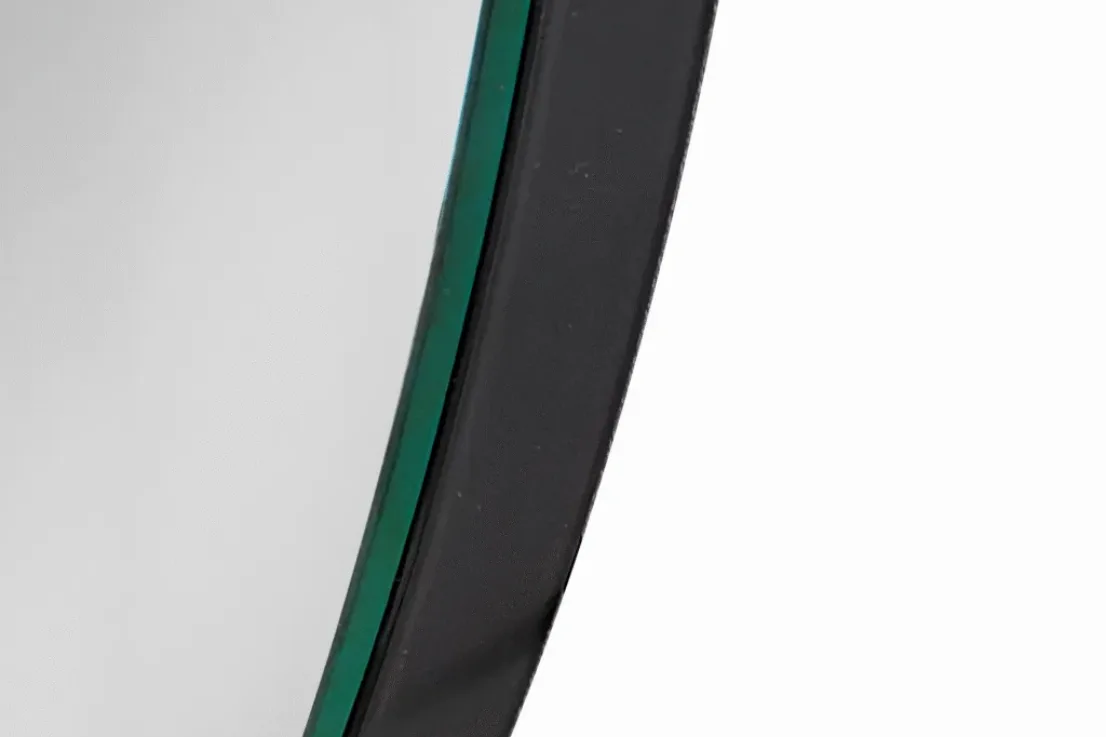
- Edge processing: Inspect for chips, cracks, rough edges, and damage to protective backing.
- Coating and durability: Request relevant test reports where corrosion resistance or coating adhesion is important.
- Dimensions: Verify product dimensions, mounting points, tolerances, and compatibility with project drawings.
- Electrical configuration: For LED products, confirm the specified voltage, wiring, plug type, and applicable safety requirements.
- Functional testing: Check lighting, switches, anti-fog functions, and other ordered features.
- Packaging: Review protective materials, corner protection, and evidence of suitable transportation testing.
- Pre-shipment inspection: Agree on inspection criteria, sampling methods, defect classification, and corrective-action procedures.
These checks should reflect the actual product and destination market. Not every test applies to every mirror, and certification claims should be verified against the exact model and applicable requirements.
5. How Can Buyers Evaluate an Experienced Mirror Manufacturer?
A manufacturer’s history is useful background information, but procurement decisions should be supported by verifiable evidence.
Evaluation factor | Questions to ask |
Manufacturing history | How long has the company manufactured mirrors or mirror cabinets? |
Quality management | Are inspection procedures documented and consistently followed? |
Defect prevention | How are recurring defects recorded and corrected? |
Product testing | Can the supplier provide relevant test reports? |
Production consistency | Are material specifications and approved samples maintained? |
Packaging | How is the product protected during international transportation? |
After-sales support | What are the procedures for reporting defects and obtaining replacement parts? |
ISO 9001 provides a framework for quality management and continual improvement. If a supplier claims certification, buyers should verify the certificate’s validity, scope, and issuing body.
A credible manufacturer should be able to explain not only what it produces, but also how it controls production risks and responds when problems occur.
6. How Does Aosmay Support B2B Mirror and Mirror Cabinet Buyers?
Aosmay is a Foshan bathroom mirror and mirror cabinet manufacturer with experience dating back to 1999, providing OEM/ODM services for international commercial projects and business customers.
Its product offering includes fully assembled LED bathroom mirror cabinets designed to simplify installation and preserve usable internal storage space.
Depending on the selected product and project requirements, buyers can discuss cabinet materials, mirror specifications, lighting configurations, functions, dimensions, and other customization needs.
For wholesale and project procurement, the appropriate approach is to confirm the required specifications, review applicable quality documentation, approve samples, and establish acceptance criteria before mass production.
Aosmay also offers free design services to help buyers evaluate product configurations for their projects.
Explore our LED mirror cabinets or LED mirrors to discuss your sourcing requirements.
7. Frequently Asked Questions
Can manufacturing experience guarantee defect-free mirrors?
No. Experience can support better process control and problem-solving, but it cannot guarantee zero defects. Documented inspections, relevant testing, and corrective actions provide more meaningful evidence.
What causes black edges on bathroom mirrors?
Black edges can develop when the mirror’s vulnerable edge or backing is damaged and exposed to moisture or other damaging substances. Edge-processing quality, installation conditions, and cleaning practices can all matter.
How can buyers check mirror quality before bulk orders?
Request samples, approved specifications, relevant test reports, dimensional checks, inspection criteria, and packaging information. Agree on acceptance requirements before mass production.
Is a more experienced mirror manufacturer always better?
Not necessarily. Buyers should compare manufacturing experience with current production capabilities, quality-management procedures, test evidence, customization capacity, and after-sales support.
What should importers check when sourcing LED bathroom mirrors?
In addition to glass appearance and edge quality, verify electrical specifications, applicable certifications, lighting functions, cabinet construction, mounting requirements, packaging, and warranty terms.
8. Conclusion
Manufacturing experience matters because preventing mirror defects requires more than visual inspection at the end of production. Consistent handling, controlled edge processing, suitable protective measures, documented inspections, and effective corrective actions all contribute to product quality.
For bulk buyers, the best supplier is not simply the one with the longest history. It is the manufacturer that can demonstrate how its experience translates into repeatable processes, verifiable quality evidence, and reliable support throughout the order.
Planning a mirror or LED mirror cabinet project? Contact Aosmay to discuss your specifications and request free design services.