
When sourcing bathroom fixtures for luxury hotels, multi-family apartments, or large-scale retail distribution, buyers naturally focus on the obvious features: LED lighting quality, glass clarity, and sleek designs. However, one of the most frustrating post-installation issues often goes unnoticed during the initial procurement phase—mirror door alignment problems.
There is nothing that ruins the premium feel of a newly renovated bathroom faster than crooked, uneven mirror cabinet doors. For cross-border wholesalers and project contractors, resolving these alignment discrepancies onsite translates to wasted labor hours, delayed project handovers, and costly warranty claims.
To help buyers avoid these pitfalls, this comprehensive guide deconstructs the hidden quality issues that cause misaligned mirrored cabinet doors, explains how international transit affects hardware, and reveals how premium manufacturers solve these problems through rigorous hinge selection and testing.
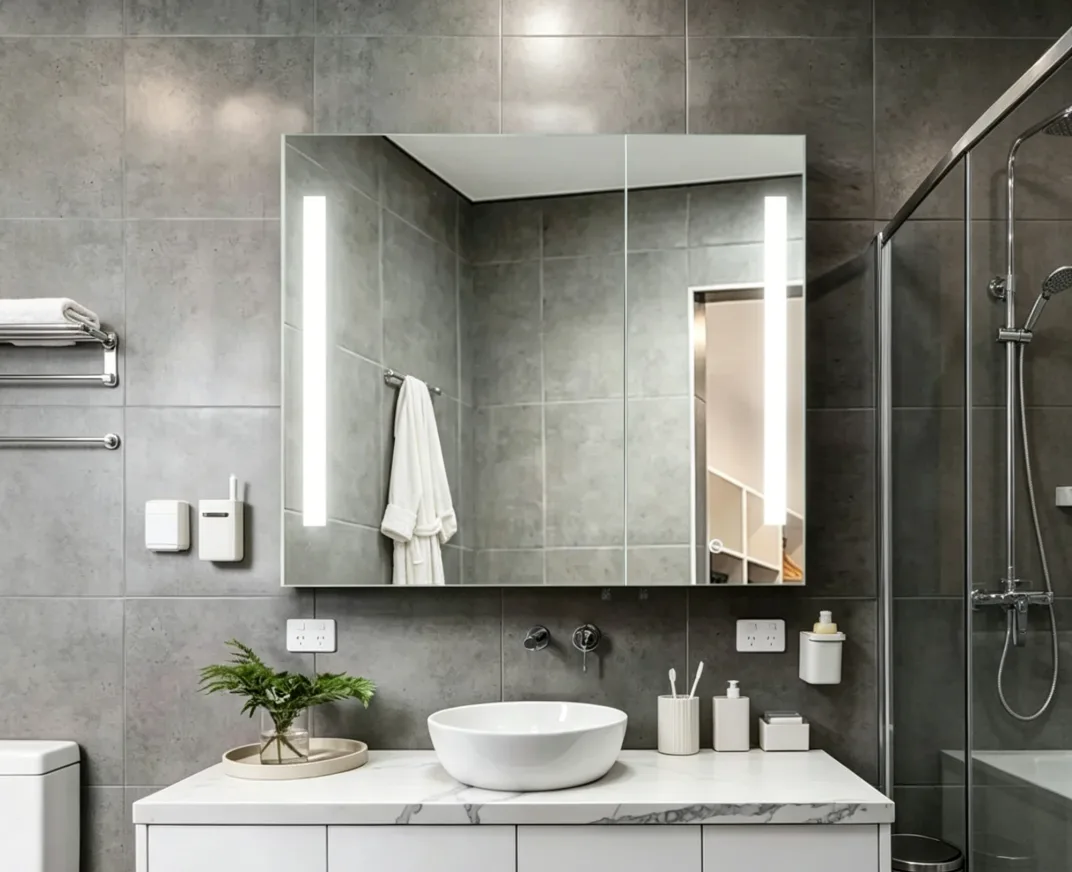
Aosmay 30×26 Inch Black LED Mirror Medicine Cabinet
1. Why Perfect Door Alignment Matters in Commercial Projects
In professional cabinetry, the uniform spacing between the doors—often called the “reveal” or “gap line”—is the ultimate indicator of manufacturing quality. For premium Mirror Cabinets, achieving perfectly symmetrical doors is critical for two main reasons:
- The Visual Aesthetic: Modern bathrooms rely on clean, minimalist lines. If double doors are uneven, the mirror catches the light incorrectly, breaking the continuous reflection. This subtle flaw instantly makes an expensive vanity setup look cheap and poorly constructed to end-users.
- Smooth Operation & Glass Protection: Misalignment is more than just an eyesore; it is a functional hazard. If doors sag inward or sit unevenly, the glass edges will rub against each other or scrape against the metal chassis when opened. Over time, this constant friction leads to micro-chipping along the glass borders, which can ruin the mirror’s silver backing and cause black edges.
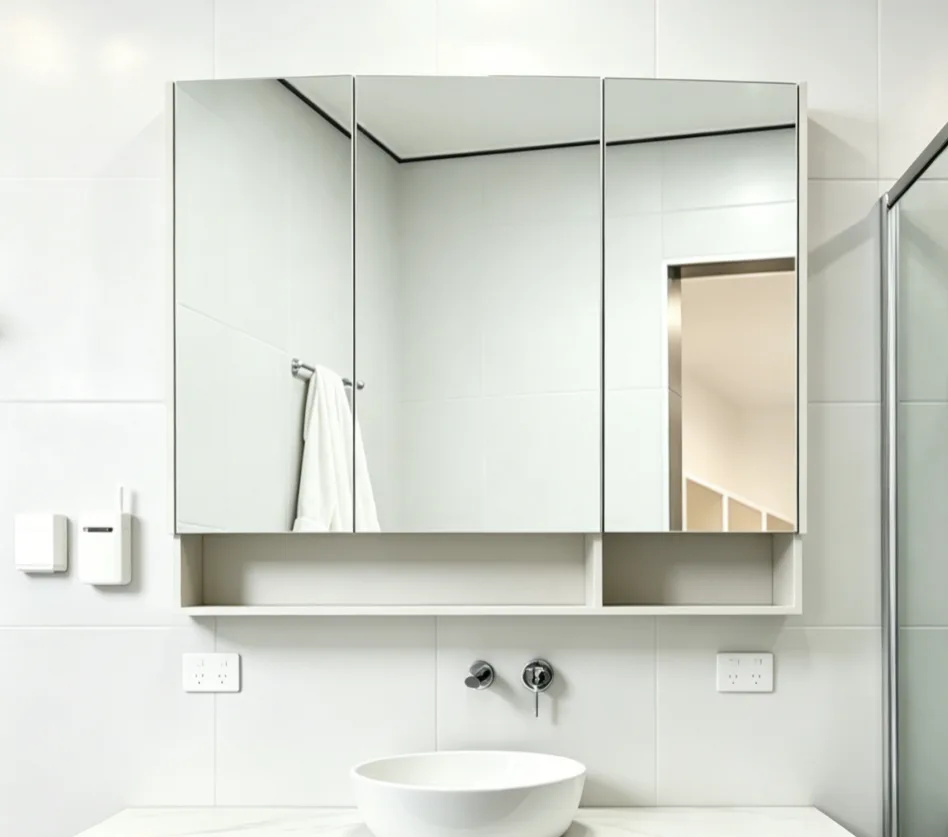
2. The Three Root Causes of Misaligned Mirrored Cabinet Doors
When doors hang crookedly, the immediate reaction is often to blame the installation worker. However, in the wholesale manufacturing industry, persistent door alignment problems are usually the result of three specific quality and logistical variables.
Cause 1: Substandard Hinge Material and Hardware Fatigue
The doors on illuminated Mirror Cabinets are exceptionally heavy due to the thick 5mm glass and built-in electronics (like defogger pads). If a manufacturer cuts costs by using low-grade zinc alloy hinges, the metal simply cannot support the constant dynamic weight. Within a few months of daily use, the cheap hinge arms will warp and bend. Once the hardware suffers from metal fatigue, the doors will permanently sag downward, completely destroying the alignment.
Cause 2: Using the Wrong Hinge Type for Heavy Mirror Cabinets
Not all mirror cabinets should use the same hardware. A major cause of alignment failure is a mismatch between the cabinet’s weight and the hinge type. For example, if a heavy-duty stainless steel or iron cabinet is equipped with just two standard concealed hinges, the massive weight is concentrated on two tiny points. This inevitably leads to door sagging. Manufacturers who fail to upgrade to Continuous Piano Hinges for heavy metal mirror cabinets guarantee future alignment issues for their buyers.
Cause 3: Kinetic Settlement During Cross-Border Transit
Even if a mirror cabinet is perfectly aligned on the factory assembly line, it still has to survive a grueling journey. During international ocean freight and rough truck transport, fixtures endure constant, high-frequency vibrations. If the hinges are not secured with commercial-grade locking screws, these transit vibrations can cause the mounting plates to shift slightly on their tracks. When the container is finally unpacked at the jobsite, the doors arrive misaligned due to this kinetic transit settlement.
3. The Aosmay Solution: Engineering Flawless Door Alignment
Solving alignment issues requires a manufacturer to prioritize hardware quality just as much as the exterior design. The structural stability of an Aosmay mirror cabinet is engineered specifically to eliminate sagging and withstand transit stress.
3.1. Material-Specific Hinge Selection
At Aosmay, we eliminate “Cause 2” by strictly matching the hinge type to the chassis material, ensuring the hardware can handle the exact weight of the mirrored cabinet doors:
- For Aluminum Mirror Cabinets: We utilize premium, heavy-duty 3D-adjustable hydraulic hinges. Because aluminum is highly durable but lightweight, these robust concealed hinges easily support the doors while allowing for precise micro-adjustments during installation.
- For Stainless Stainless Steel Mirror Cabinets& Powder Coating Mirror Cabinets: Because these materials are heavy-duty and designed for maximum commercial use, we utilize Continuous Piano Hinges. A piano hinge runs the entire vertical length of the mirror cabinet, distributing the massive weight of the door perfectly across the whole frame. This structural upgrade makes the doors virtually immune to sagging.
3.2. The 100000-Cycle Fatigue Test
To completely eliminate “Cause 1” (Hardware Fatigue), Aosmay refuses to use cheap alloys. We prove the durability of our hinges through extreme factory testing. Before any hinge design is approved, it must flawlessly pass an 100000-cycle opening and closing fatigue test using robotic arms under maximum payload conditions. This guarantees that whether installed in a busy hotel or a family home, the doors will remain perfectly aligned for decades without the hinges warping or losing tension.
3.3. Drop-Tested Commercial Packaging Guarantee
To combat the intense vibrations and impacts of international ocean freight and rough trucking (“Cause 3”), Aosmay has engineered a comprehensive transit protection system. Rather than relying solely on hardware tension, we protect the structural integrity and geometric symmetry of the mirror cabinet through commercial-grade, shock-absorbing packaging.
Every Aosmay mirror cabinet is securely encased within custom-molded high-density foam (EPE), reinforced with rigid corner protectors, and sealed in heavy-duty corrugated export cartons. This superior packaging system undergoes rigorous “Drop-Test” protocols to ensure it absorbs kinetic energy and prevents internal shifting. This robust transit guarantee ensures that the exact door alignment calibrated by our factory quality control inspectors is perfectly preserved, allowing your fixtures to arrive at the jobsite in flawless, ready-to-install condition.
4. Field Troubleshooting: How to Adjust Standard Mirror Cabinet Hinges
Even with the best hardware and secure transit, minor adjustments may be necessary to accommodate uneven bathroom walls at the installation site. For aluminum Mirror Cabinets equipped with 3D-adjustable concealed hinges, resolving alignment is a simple process that requires only a Phillips screwdriver.
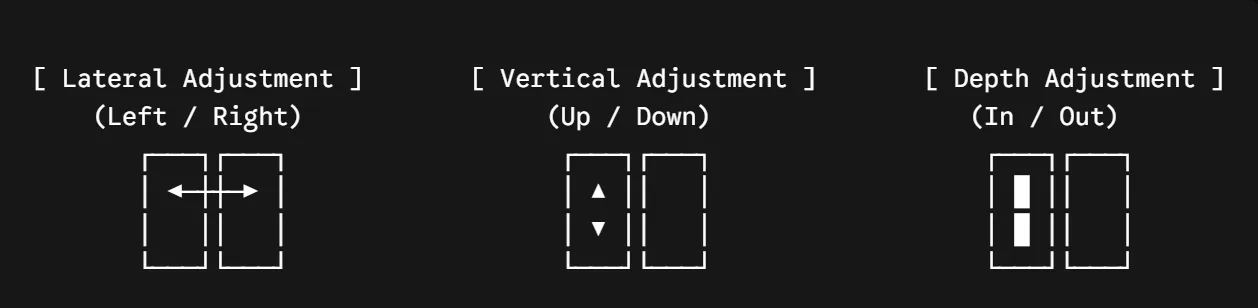
Here is the standard 3-way adjustment guide to easily fix uneven doors onsite:
- Left/Right Adjustment (Fixing the Center Gap): If the gap between double doors is wider at the top than the bottom, locate the front-most screw on the hinge arm. Turning this screw slightly will tilt the door left or right, allowing you to create a perfectly parallel center gap.
- Up/Down Adjustment (Fixing Uneven Heights): If one door sits higher than the other, loosen the mounting plate screws attached to the inside cabinet wall. Slide the entire door up or down until the top glass edges are perfectly level, then retighten the screws.
- In/Out Adjustment (Fixing Flushness): If one door sticks out further than the mirror cabinet frame, use the rear-most screw on the hinge arm to pull the door closer to the mirror cabinet body, ensuring a smooth, flush profile.
5. FAQs
Q1: Why do my mirrored cabinet doors overlap or rub against each other?
A: This is usually caused by weak hinges that have warped under the weight of the glass, or screws that have loosened. To fix this, adjust the lateral (left/right) screws on the hinges to pull the doors apart. To prevent it from happening again, source cabinets with heavy-duty hardware that has passed rigorous fatigue testing.
Q2: Are piano hinges better than standard hinges for mirror cabinets?
A: It depends on the mirror cabinet material. For heavy metal chassis like stainless steel or powder-coated iron, continuous piano hinges are superior because they distribute the heavy weight evenly, preventing door sag. For lighter aluminum mirror cabinets, high-quality standard hydraulic hinges are excellent and offer the benefit of 3D adjustability.
Q3: How does Aosmay ensure their mirror cabinet doors won’t sag in hotel projects?
A: Every Aosmay mirror cabinet is engineered with commercial-grade hardware matched specifically to the cabinet’s weight. Furthermore, our hinge systems are verified by an industry-leading 100000-cycle fatigue test, guaranteeing that the doors will remain perfectly aligned under extreme daily commercial use.
6. Conclusion: Don’t Let Poor Hardware Ruin Your Project
In the highly competitive world of sanitary ware wholesale and commercial project development, the difference between a high-end fixture and a cheap imitation often comes down to the quality of the hardware. Mirror door alignment problems are entirely preventable when you source from a manufacturer that understands the physics of heavy glass doors and international transit.
By specifying Mirror Cabinets equipped with100000-cycle tested hinges—whether premium 3D-adjustable mechanisms for aluminum or continuous piano hinges for steel—buyers can eliminate post-installation headaches and protect their brand’s reputation for quality.
[Explore Aosmay’s Catalog of Premium Mirror Cabinets] or [Contact Our Quality Control Team for Custom OEM Specs].