
In the intricate world of commercial real estate development and hospitality design, aesthetics often dominate the conversation. However, for project managers, general contractors, and facility engineers, safety and structural integrity remain the paramount concerns. One of the most frequently overlooked structural challenges in modern bathroom design involves the primary storage fixture: the wall mounted mirror cabinet.
When outfitting a 500-unit high-rise apartment or a luxury 5-star hotel, procurement teams must ask a critical structural question: How much weight can a bathroom mirror cabinet hold? A failure in load-bearing capacity doesn’t just result in broken glass; it leads to severe safety liabilities, compromised plumbing walls, and costly structural repairs. Drawing from 27 years of OEM/ODM manufacturing expertise, this comprehensive commercial guide explores the physics of heavy-duty storage, the exact materials required to prevent wall failure, and why global developers specify Aosmay Custom Mirror Cabinets for their guaranteed 15-20KG heavy-duty commercial capacity.

Aosmay 31×25 Inches Two Door Medicine Cabinet with LED Light
1. The Commercial Load Reality for a Wall Mounted Mirror Cabinet
To understand why weight capacity is a critical procurement metric, we must analyze the real-world usage of these fixtures in commercial spaces.
1.1. Dynamic vs. Static Weight
When calculating the structural load of a cabinet, engineers account for two types of weight:
- Static Weight: The permanent dead weight of the cabinet chassis, the heavy glass mirror doors, and integrated electrical components like LED drivers and demister heating pads.
- Dynamic Weight: The shifting force exerted when a hotel guest aggressively pulls a heavy mirrored door open. It also includes the payload of items stored inside, such as thick glass amenity bottles, large volumes of liquid hair care products, and heavy electric grooming tools.
1.2. The 15-20KG Standard: How Much Weight Can a Bathroom Mirror Cabinet Hold?
So, exactly how much weight can a bathroom mirror cabinet hold?
Standard residential cabinets purchased from retail hardware stores are typically designed to hold a mere 5 to 8 kilograms (11 to 17 lbs). In a commercial hotel or high-density apartment, this is a severe liability.
For commercial projects, the engineering gold standard is 15 to 20 Kilograms (33 to 44 lbs) of internal payload capacity, exclusive of the cabinet’s own weight. This 15-20KG threshold ensures that even if every shelf is loaded with heavy liquids and appliances, the structural anchor points remain rock-solid.
2. The Core Trio: Materials Defining How Much Weight Can a Bathroom Mirror Cabinet Hold
Achieving a 15-20KG weight capacity requires abandoning cheap wooden MDF (which warps and drops screws in humid environments). At Aosmay, we achieve our commercial load ratings by utilizing three distinct, heavy-duty metallic chassis options, allowing developers to balance project budgets with structural needs.
2.1. Option A: Powder Coating Mirror Cabinet (Cost-Effective Strength)
For large-scale apartment complexes where budget and durability must align, powder-coated iron is highly specified. Iron provides immense tensile strength and rigidity, preventing the cabinet box from twisting under a 20KG load. The high-temperature powder coating seals the metal entirely, offering excellent rust protection and a sleek matte finish that modern renters love.
2.2. Option B: Aluminum Mirror Cabinet (Lightweight & 100% Rust-Proof)
Aluminum is the premium choice for coastal resorts or older buildings where wall load-bearing limits are a concern. Aluminum is significantly lighter than iron, reducing the static strain on the wall anchors. More importantly, it is naturally 100% rust-proof. Despite its lighter weight, commercial-grade extruded aluminum easily supports the 15-20KG payload requirement without bending.
2.3. Option C: Stainless Steel Mirror Cabinet (Maximum Rigidity)
For 5-star luxury hotels and high-traffic commercial public restrooms, stainless steel is the undisputed champion. It offers the highest level of structural rigidity and impact resistance available. A stainless steel chassis will not warp, dent, or degrade, ensuring the cabinet holds its maximum weight capacity safely for decades of intensive commercial use.
2.4. Material Science Data: Yield Strength vs. Load Capacity
To understand why retail-grade MDF (wood) cabinets frequently fail in commercial environments, we must look at the raw material science. The structural integrity of a mirror cabinet under a dynamic 20KG load is determined by its Yield Strength—the maximum stress a material can endure before it permanently deforms.
As verified by international material property databases, the metallic chassis used in Aosmay Custom Mirror Cabinets provides up to 15 times the structural strength of traditional retail wooden cabinets.
Cabinet Chassis Material | Tensile Yield Strength (MPa)* | Moisture Degradation Risk | Structural Suitability for 15-20KG Load |
Retail MDF (Engineered Wood) | 15 – 20 MPa | High (Swells and rots over time) | Highly Unsafe (Screws strip easily) |
Anodized Aluminum (6063-T5) | 145 MPa | Zero (100% Rust-proof) | Excellent (Lightweight & rigid) |
Premium Stainless Steel (304) | 215 MPa | Low (Highly resistant) | Exceptional (Maximum impact resistance) |
Powder-Coated Steel (CRS) | 250 MPa | Low (Sealed polymer armor) | Exceptional (Heavy-duty rigidity) |
*Data Reference: Average yield strength parameters for architectural materials. For comprehensive mechanical properties of metals, engineers refer to the [MatWeb Material Property Data].
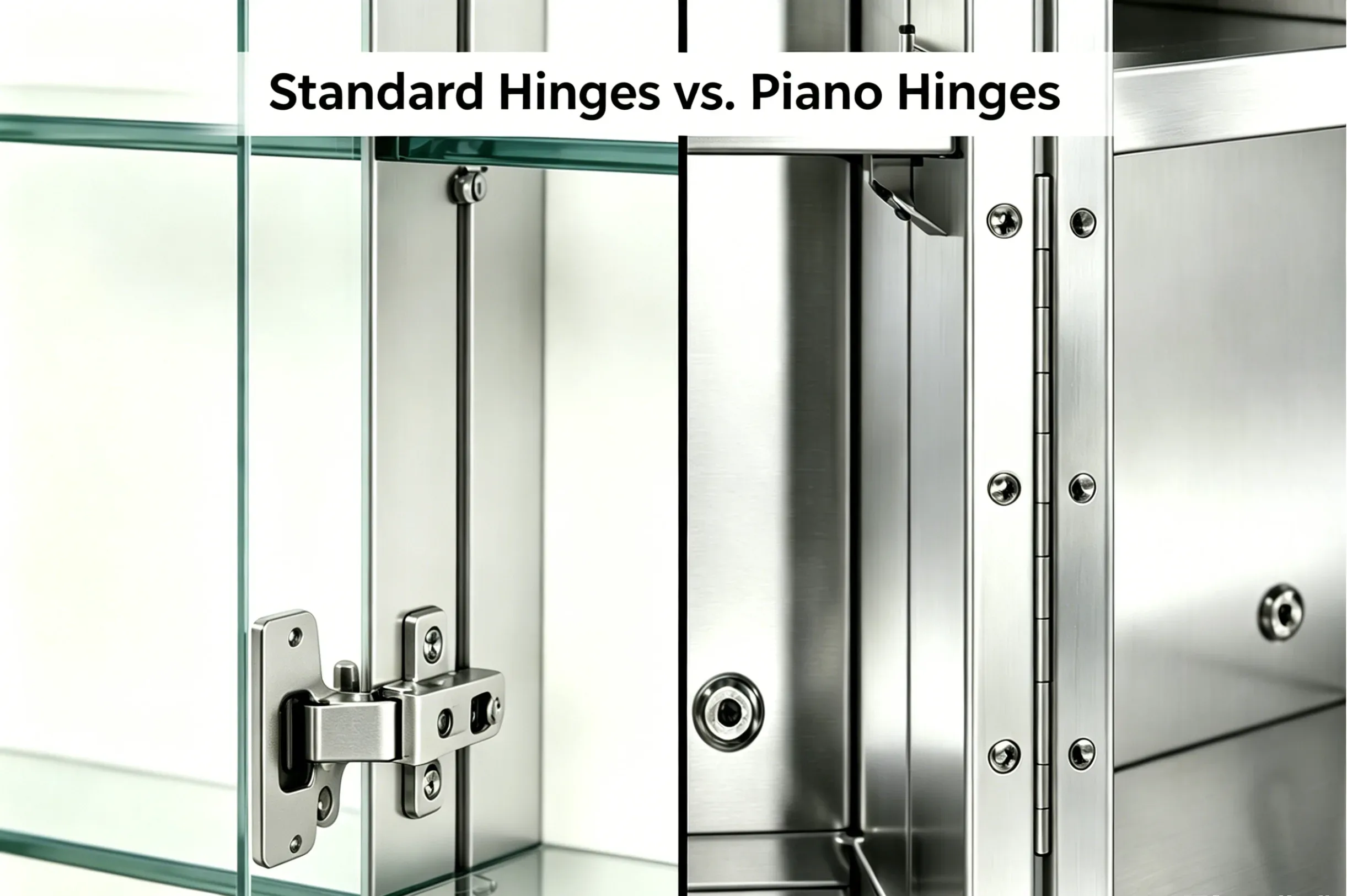
3. The Secret to Heavy Doors: Standard Hinges vs. Piano Hinges
The doors of a modern illuminated mirror cabinet are exceptionally heavy due to the 5mm copper-free glass, LED lighting strips, and internal heating wires. How the cabinet connects these heavy doors to the chassis is the most critical factor in preventing the cabinet from tearing off the wall.
At Aosmay, we utilize two commercial-grade hinge solutions depending on the project’s exact needs:
3.1. Standard Hydraulic Soft-Close Hinges
For standard-sized cabinets, we utilize heavy-duty, multi-way adjustable hydraulic hinges. These allow contractors to perfectly align the doors during installation. High-quality hydraulic hinges ensure that the dynamic force of slamming a heavy door is absorbed by the hydraulic cylinder, rather than transferring that violent kinetic energy into the wall anchors.
3.2. Continuous Piano Hinges
For oversized Aosmay Custom Mirror Cabinets or ultra-heavy double-sided mirrored doors, we specify Continuous Piano Hinges. Unlike standard hinges that concentrate the door’s massive weight onto two or three small connection points, a piano hinge runs the entire vertical length of the cabinet door.
- The Load-Bearing Advantage: This design distributes the heavy weight of the mirror perfectly across the entire vertical chassis. It completely eliminates “door sag” over time and ensures the torque is spread evenly, making it an incredibly secure option for maximum 20KG payload environments.
4. Contractor’s Guide: How to Hang a Heavy Wall Mounted Mirror Cabinet Safely
A cabinet built to hold 15-20KG is only as strong as its installation. Let’s skip the complicated engineering talk. Here is a straightforward, practical guide to making sure these heavy fixtures stay firmly on the wall and look fantastic.
4.1. Recessed Installation (The Safest Structural Choice)
The most secure way to hold a heavy commercial load is to recess the cabinet directly into the wall cavity. By mounting the cabinet chassis directly to the vertical wooden or steel studs inside the wall, the weight is supported by the building’s core framing, effectively neutralizing the risk of the cabinet falling.
- Pro Resource: Recessing a cabinet requires specific framing planning. For a comprehensive guide on framing, sealing, and securing recessed units without compromising structural integrity, contractors should consult our deep-dive article: 7 PRO TIPS TO INSTALL A RECESSED MEDICINE CABINET [TYPE & MAINTENANCE GUIDE].
4.2. The Interlocking Z-Bar Mounting System
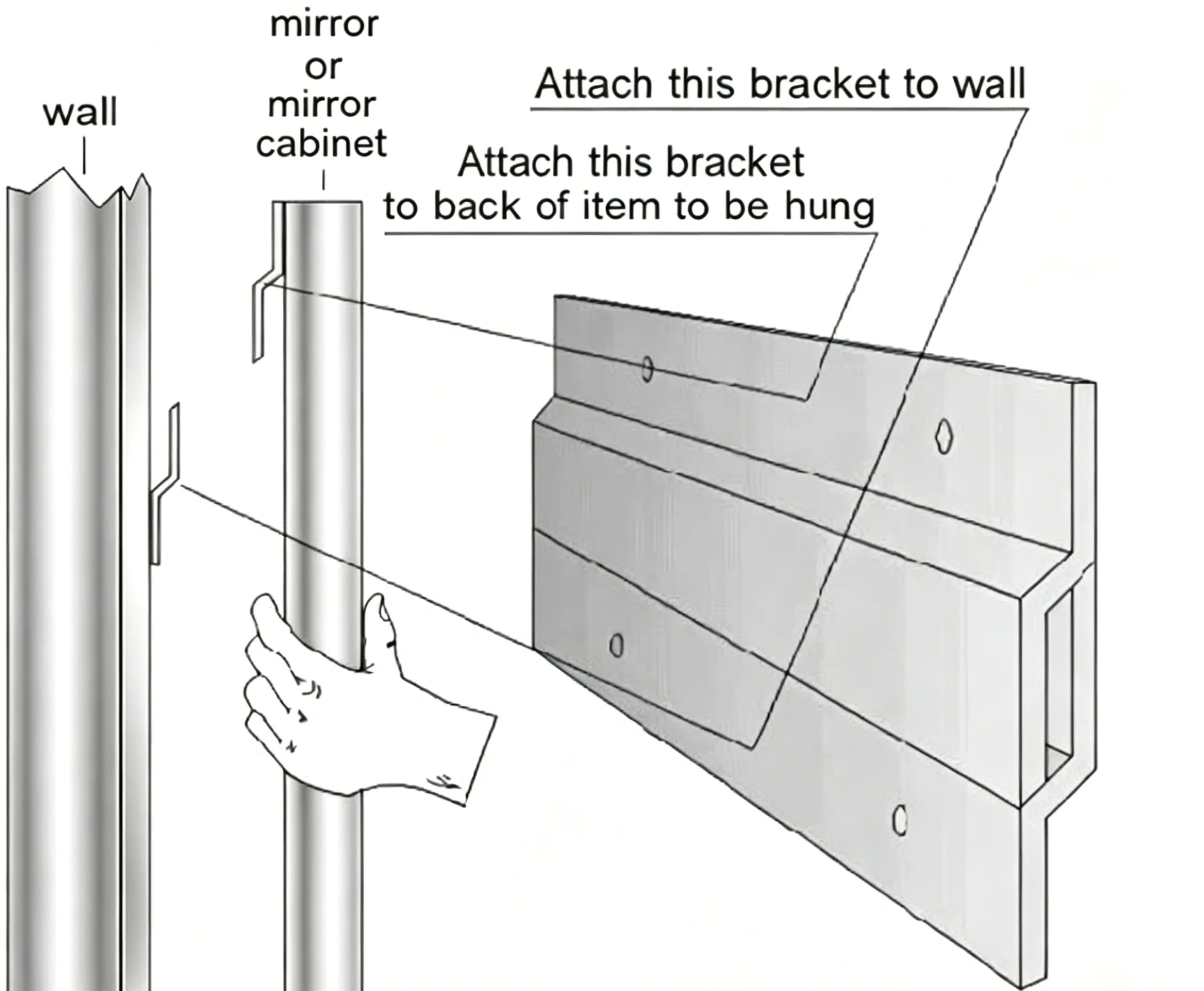
How does Aosmay achieve this massive weight rating? We eliminate traditional keyhole screws and utilize an extruded aluminum Z-bar interlocking mounting system.
- How it works: The contractor securely anchors a long metal Z-bar horizontally across multiple wall studs. The rear of the Aosmay cabinet features a reverse interlocking lip that drops seamlessly onto the wall bar.
- The Engineering Benefit: This system distributes the 20KG weight evenly across the entire width of the wall, rather than concentrating the shear force on two single points. This guarantees a perfectly level, incredibly robust installation that takes an electrician mere minutes to mount.
>> Video tutorial on installing a bathroom mirror cabinet using a “Z-Bar”
5. FAQs
Q1: Can a wall mounted mirror cabinet safely hold 15-20KG on standard drywall?
A: Not on drywall alone. While Aosmay Custom Mirror Cabinets are engineered to support 15-20KG, the wall itself must handle the shear force. For commercial safety, contractors must anchor the cabinet’s mounting brackets directly into structural wooden or steel wall studs.
Q2: Exactly how much weight can a bathroom mirror cabinet hold safely?
A: While standard retail models typically hold only 5-8KG (11-17 lbs), commercial-grade fixtures like Aosmay Custom Mirror Cabinets are engineered with rigid metallic chassis and heavy-duty hinges to safely support internal payloads of 15 to 20KG (33 to 44 lbs).
Q3: Why are Piano Hinges recommended for large LED mirror cabinets?
A: Large mirrored doors containing LED components and defoggers are extremely heavy. A continuous piano hinge distributes this weight evenly along the entire height of the cabinet, preventing door sagging and reducing the localized stress placed on the wall mounting anchors.
6. Conclusion
In commercial architecture, prioritizing aesthetic design while neglecting load-bearing engineering is a costly mistake. An overloaded, poorly mounted cabinet is a major liability waiting to happen.
By demanding fixtures that meet the strict 15-20KG commercial payload standard, developers and wholesalers protect their investments, ensure tenant safety, and drastically reduce long-term post-handover maintenance costs.
When your project demands the perfect intersection of minimalist luxury, smart technology, and heavy-duty structural integrity, partnering with an experienced OEM manufacturer is the only solution.
[Explore the Heavy-Duty Catalog of Aosmay Custom Mirror Cabinets] or [Submit Your Blueprints for a Commercial Project Quote].