

1. Lead in
Choosing the right medicine cabinet pharmacy is not just about style or space—it also requires compliance with the 2010 ADA Standards for Accessible Design and the International Building Code (IBC) in the USA to ensure safe installation and user convenience. For B2B buyers, ignoring these regulations can lead to safety issues, costly modifications, or project delays. This guide explores eight key factors—from layout planning and ergonomics to storage access and long-term durability—helping procurement professionals and designers make informed decisions when selecting mirror cabinets for residential or commercial projects.
2. Understand Standard Opening Options
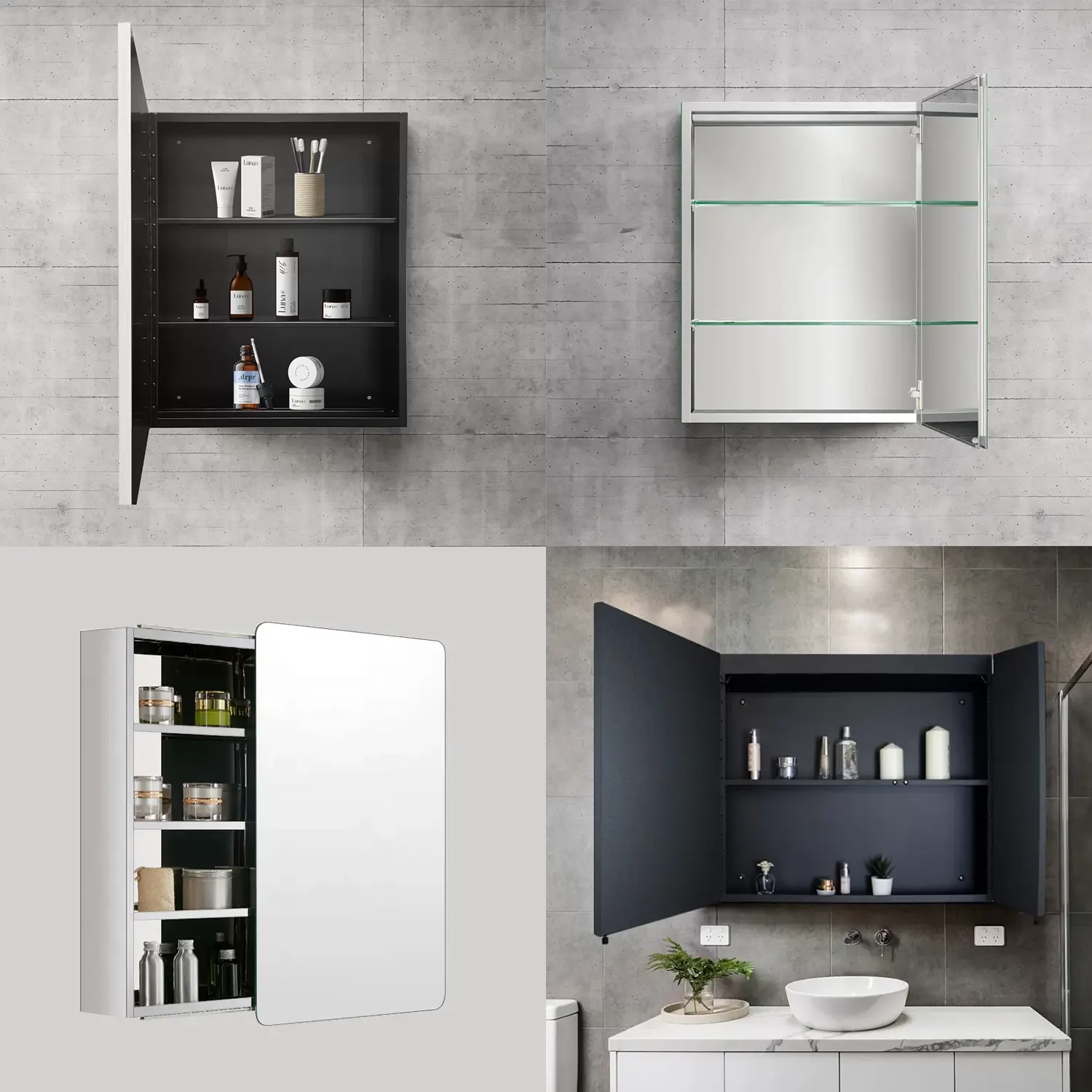
When shopping for a medicine cabinet pharmacy, it is important to know the standard open methods. Most popular are swing left, swing right, sliding doors and mirrored double doors. Swing doors are nice and compact if you put them in the right spot and sliding doors are great for tight areas that don’t have a lot of clearance. Mirrored double doors add symmetry and function in the case of larger cabinets. When you understand these fundamental designs, you can look for what most closely meets the existing structure of your bathroom, the tendencies of the users, and the needs of the project and find the perfect marriage between a snug fit and function, for daily comfort.
3. Consider Bathroom Layout and Space Constraints
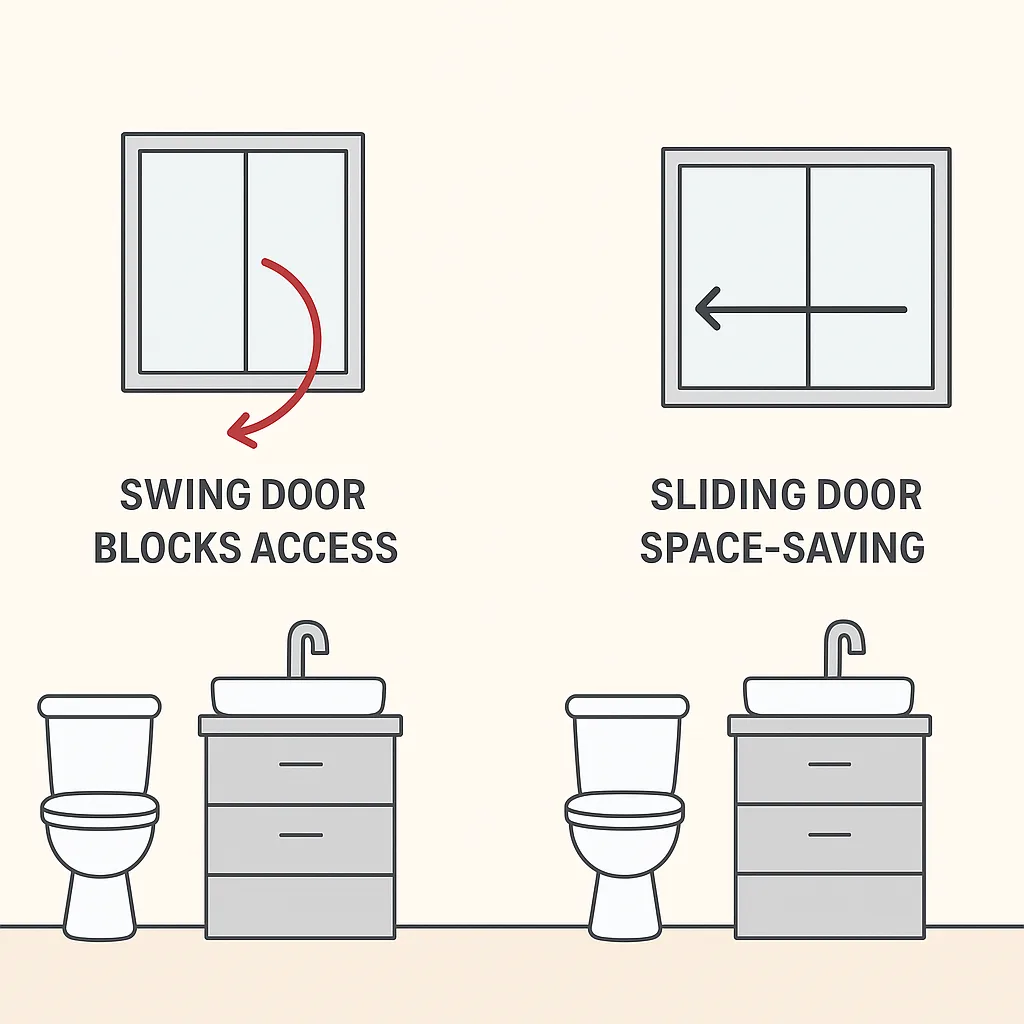
Always make sure the direction your medicine cabinet pharmacy opens corresponds to the general bathroom design. The size of the bathroom is unlikely to be the deciding factor, but rather the layout and the incorporation of other fixtures such as toilets, showers or vanities that take up precious floor space. For instance, if a swing door opens up into a shower wall, it can block access, and a sliding door will prevent that. It ensures the cabinet opens smoothly with no collisions by judging clearances, user comfort, and daily traffic. Good planning for these spatial constraints results in optimal function and avoids costly remodeling headaches whether for home or business.
4. Compliance with Building Codes & Regulations
While a medicine cabinet pharmacy opening direction may be optional, ensuring it is up to building code is not. Various areas have regulations regarding the safety and accessibility that impact the orientation of the door. In the United States, you must reference the 2010 ADA Standards for Accessible Design. More detailed information may be found at https://www.ada.gov/lawandregs/design/2010-03-15standards.html. These standards provide the criteria for spaces to be usable by everyone.
This is supplemented by the International Building Code (IBC) in the USA that is “widely used” and that “provide universal design standards for accessible and usable buildings”. In Europe, standard EN 14749 applies to domestic use storage furniture, such as bathroom cabinets. In Australia, the focus is on safe installation around plumbing fixtures as set out by the (NCC) National Construction Code. Following these rules will guarantee that you are not only legally compliant but also safe and easy to use for end-users.
5. Ease of Installation and Maintenance
The hand a medicine cabinet pharmacy opens also impacts directly on its future relative ease of installation and servicing. A door that opens to the left or the right will need space in that direction for hinges, and a sliding door will require a perfectly aligned track. If the door opens up into a tight corner, it can be difficult to mount, but you will also find it hard to perform routine tasks like changing mirrors, adjusting the hinges, or cleaning them. Selecting a cabinet design that provides easy installation and access for short maintenance turns helps to lower labor costs and downtime, making the cabinet more economically viable for contractors and end-users on showcase commercial jobs.
Recommended Opening Options by Scenario
| Opening Type | Best Scenario | Minimum Clearance Needed |
| Swing Left | Left wall free of obstacles | 50–60 cm side clearance |
| Swing Right | Right side open (no vanity/toilet) | 50–60 cm side clearance |
| Sliding Doors | Small bathrooms, narrow passages | 5–8 cm track depth |
| Mirrored Double Doors | Wide vanity, balanced look, easy access | 60–80 cm cabinet width |
6. User Habit and Ergonomics
User behaviour patterns and ergonomistics have a significant effect on door orientation. For example, a right-handed person might feel comfortable with a door that swings right, as opposed to a southpaw who may opt for a swing-left door and get easily accessed. Sliding doors, in contrast, eliminate this barrier; making access easy for both. For commercial projects such as hotels or public bathrooms, the design you go with to meet all users needs will help with accessibility, comfort and ease. If functionality of cabinet is kept together to match human ergonomic, not only improve daily effiency, lower redundant action, but also constitute humanism in residential and large space.
Recommended Options by User Habit
| User Type | Recommended Opening Type | Notes on Convenience |
| Right-handed users | Swing Right | 70% of global population are right-handed |
| Left-handed users | Swing Left | 10% of users prefer this orientation |
| Mixed/Public use | Sliding Doors / Double Doors | Equal access, avoids handedness issues |
7. Mirror Cabinet Functionality
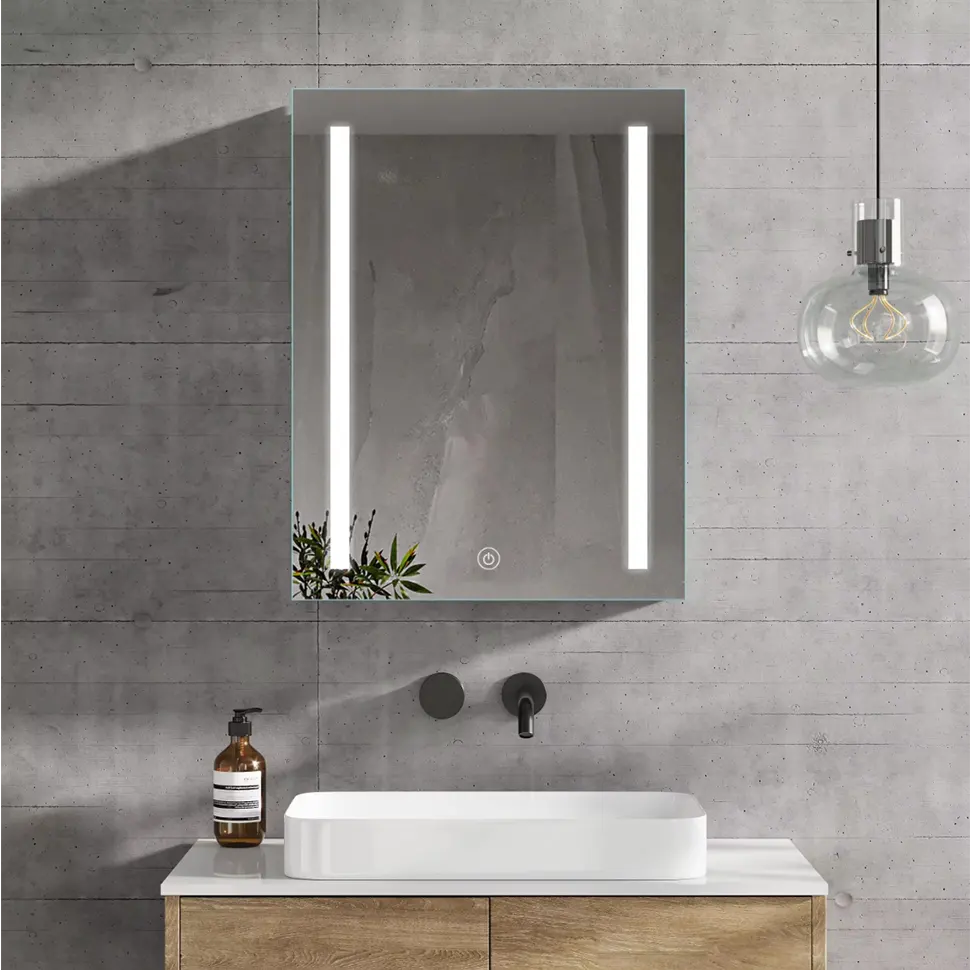
When it comes to choosing a mirrored cabinet, function is just as important as form. The opening orientation could impact reflection angle and visibility if users stand at different positions. For example, a door that opens toward the main light source may create shadows, while sliding or double doors can work more coherently with vanity light. When installed correctly, they evenly light the surface behind it, give maximum visibility and leave no reflection (offset ). Taking these points into account allows for a less practical, and a more user-friendly cabinet, helping the item to perform more effectively in residential and commercial bathroom settings.
Impact of Door Type on Reflection & Lighting
| Opening Type | Reflection Angle | Lighting Integration | Notes |
| Swing Left | May block right-side view | Risk of shadow if light is on right | Better with left-wall lighting |
| Swing Right | May block left-side view | Risk of shadow if light is on left | Better with right-wall lighting |
| Sliding Doors | Balanced visibility | Minimal shadow effect | Works well in compact layouts |
| Mirrored Double Doors | Wide, symmetrical view | Even lighting distribution | Ideal for larger vanities |
8. Storage Access and Organization
The direction that a medicine cabinet pharmacy door opens can play the key role in affecting the ability to reach shelves, and essential countertop space. A swing door that opens into the vanity can obstruct access to counter-making accessibility a hassle during daily tasks. Sliding doors, on the other hand, give free access to the shelves but limit surface areas. I say technically for a couple reasons: Double doors allow for some flexible reach, but they need sufficient front clearance to fully open. For B2B buyers, the consideration of how storage access fits in with your intended user habits leads to better organized, more practical use of space and even greater functionality on your residential and commercial bathrooms projects.
9. Medicine Cabinet Pharmacy Customization for B2B Projects
Customization is important for B2B buyers of medicine cabinets. A variety of manufacturers offer OEM/ODM customization, so that door swing orientation can better meet the needs of the project. Regarding reversible hinge designs, these are particularly useful for builders in the context of big developments since they allow that one cabinet model also has a left and a right opening, which simplifies SKU complexity and inventory carrying costs. This versatility is what makes this perfect for hotel, apartment or healthcare bathroom designs. By selecting supply partners who can offer customizable opening solutions, users can achieve maximum control, efficiency, and flexibility in serving diverse markets.
Customization Options for B2B Buyers
| Customization Type | Application Example | Key Benefit |
| OEM (Original Equipment Manufacturing) | Branding existing cabinet models for projects | Faster delivery, cost-efficient |
| ODM (Original Design Manufacturing) | Developing unique cabinet designs | Differentiated product, market fit |
| Reversible Hinges | One model adaptable for left/right opening | Lower inventory, flexible installation |
10. Long-Term Durability and Safety
The opening direction of a medicine cabinet pharmacy is directly related to the durability and safety of use of the medicine cabinet. Swing doors can also be problematic if they open up toward adjacent walls or fixtures, increasing the likelihood of a collision and wear on the hinges. These doors alleviate the worry of slamming doors, but need adequate track systems to work efficiently. It reduces the wear and tear on hardware since weight is distributed across double doors. “The quality of hinges, tracks and dampers is important to B2B buyers to ensure the product does not wear out before it’s supposed to, to save on maintainability costs and to ensure safe use at any point in the cabinets lifecycle for home and business projects.
11. Case Examples & Market Preferences
Choices of the opening side of a medicine cabinet pharmacy door are made based of market demand in different regions. Stateside, roughly 65% of purchasers want swing-right cabinets, which mirrors the majority righties we have in the population. In Europe, about 50% of projects include sliding doors, which are popular for small, tight bathroom plans. In the Middle East, on the other hand, mirrored double doors are selected by almost 60% of customers, offering luxury appeal and practical balance for larger vanities. “The knowledge of these regional requirements allows B2B buyers to focus specific product selection according to region preference, increasing cost competitiveness and decreasing risk in large scale procurement and international projects.
Final Decision Checklist for B2B Buyers
| Step | Key Consideration | Purpose |
| 1 | Review bathroom layout & space | Avoid obstruction near vanity/toilet |
| 2 | Consider user habits & ergonomics | Ensure daily convenience for all users |
| 3 | Check local building codes | Guarantee compliance & safety |
| 4 | Evaluate OEM/ODM or hinges options | Increase flexibility & reduce SKUs |
| 5 | Confirm with drawings/samples | Prevent costly mistakes before orders |
12. Conclusion
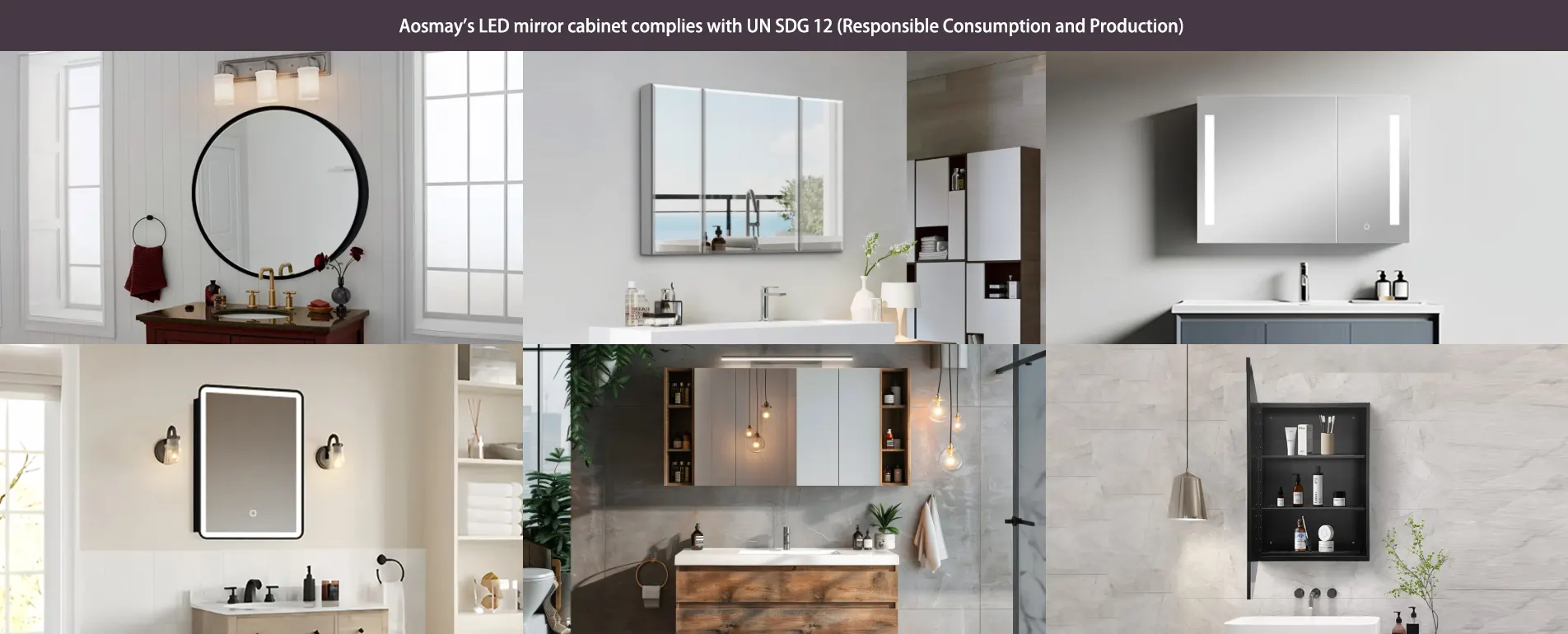
Selecting the right medicine cabinet pharmacy opening direction goes beyond convenience—it ensures safety, compliance, and durability. B2B buyers should evaluate layout, ergonomics, and regional needs before ordering. With growing emphasis on sustainability, aligning with UN SDG 12 (Responsible Consumption and Production) reinforces the value of choosing durable, high-quality solutions that reduce waste and support long-term, responsible use. Ready to source your next bulk order? Contact Aosmay today for B2B pricing and fast delivery.
If you are interested in mirror medicine cabinets, you can read previous articles to learn about industry information.
Top 10 Bathroom Mirror Manufacturers In Australia [Market Analysis and Recommendations]
6 PRO WAYS TO ORGANIZE YOUR MEDICINE CABINET [CABINET TYPES + MAINTENANCE TIPS]
5 PRO TIPS TO INSTALL A MEDICINE CABINET [TYPE & MAINTENANCE GUIDE]