
Quick Answer: For most standard [bathroom mirror cabinet replenishment orders], plan about 8–12 weeks ahead. This helps ensure the products are ready in your warehouse on time. For customized OEM/ODM bathroom mirror cabinets, plan 12–16 weeks or more.New products, complex projects, custom packaging, or large seasonal programs may require even earlier planning.
These are practical planning ranges, not universal industry standards. The actual purchase deadline depends on the supplier’s confirmed production lead time, product specifications, order quantity, quality inspection, packaging, international transportation, customs clearance, warehouse receiving, and safety stock.
The key is not to count backward from Black Friday itself. Instead, start with the date the inventory must be physically available for sale, then work backward through every stage of the supply chain.
For large and fragile products such as LED bathroom mirror cabinets, this approach can help reduce stockout risk and avoid relying on expensive emergency replenishment during the peak season.
Why Should Bathroom Mirror Cabinet Orders Be Planned So Early?
Black Friday is no longer simply a one-day shopping event.
In the United States, Black Friday 2026 falls on November 27, followed by Cyber Monday on November 30.
More importantly, recent U.S. e-commerce data shows that holiday purchasing is becoming increasingly distributed across the season.
Adobe Analytics reported that U.S. consumers spent $257.8 billion online from November 1 through December 31, 2025, up 6.8% year over year. Cyber Week generated $44.2 billion in online spending, while Black Friday alone reached $11.8 billion, up 9.1% year over year. Adobe also reported that Black Friday’s growth outpaced Cyber Monday’s growth in 2025, as consumers responded to earlier deals.
For retailers and e-commerce brands selling bathroom products, this creates an important procurement issue:
Inventory needs to be ready before the promotional peak, not when the promotion has already started.
A stockout of a high-demand LED mirror or mirror cabinet can affect more than one sale. It can disrupt advertising campaigns, customer delivery expectations, product availability and the retailer’s ability to capitalize on peak-season traffic.
For international B2B buyers, seasonal procurement should therefore be treated as a lead-time planning problem, not only a demand forecasting problem.

How Early Should You Order Bathroom Mirror Cabinets for Black Friday?
There is no single number of days that applies to every bathroom mirror cabinet supplier.
A practical starting framework is:
Product or Order Type | Practical Planning Range |
Existing standard LED mirror | 8–10 weeks |
Standard mirror cabinet replenishment | 8–12 weeks |
Large seasonal wholesale order | 10–12 weeks |
Customized OEM mirror cabinet | 12–16 weeks |
New ODM product development | 16+ weeks |
Custom packaging or private label | Allow additional approval time |
Complex hotel or project order | Plan according to project schedule |
Emergency replenishment | Expedited logistics may be required |
These ranges should be used for planning, not treated as guaranteed lead times.
For example, a standard product that is already in production may require less time than a newly customized mirror cabinet with a new size, electrical configuration, packaging design and branding.
Likewise, a large seasonal order may require earlier capacity reservation even if the actual manufacturing time is relatively short.
The important distinction is:
Planning lead time ≠ factory production time.
A supplier may tell you that production takes four weeks. That does not mean you can safely place the purchase order four weeks before the products are needed.
You still need to account for everything that happens before and after production.
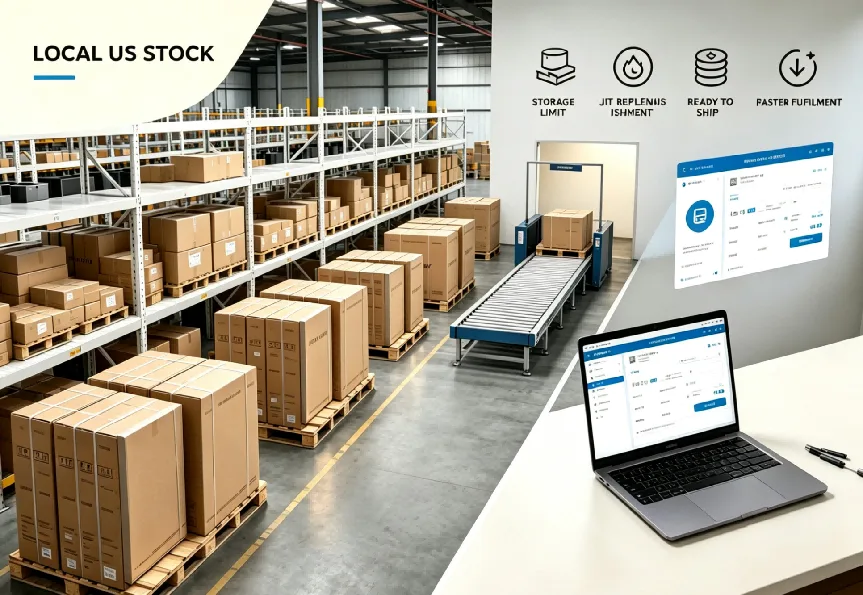
- If your replenishment window is already tight, checking S. warehouse inventorymay be an alternative to starting a new overseas production cycle.
What Should Be Included in the Total Procurement Lead Time?
For an international bathroom mirror cabinet order, the complete purchasing cycle can include:
Specification confirmation
→ Purchase order
→ Production scheduling
→ Manufacturing
→ Quality inspection
→ Packaging
→ Inland transportation
→ International freight
→ Customs clearance
→ Final delivery
→ Warehouse receiving
→ Safety stock
This is why a buyer should ask a supplier:
“When can the products be available in my warehouse?”
rather than only:
“How many days is your production lead time?”
The second question measures only one part of the supply chain.
The first question addresses the actual business requirement.
How Long Does It Take to Ship Bathroom Mirror Cabinets From China?
For buyers sourcing bathroom mirror cabinets from China, international transportation can represent a substantial part of the overall replenishment cycle.
Freightos’ current 2026 data gives average China-to-U.S. transit ranges of approximately:
Shipping Method | Port-to-Port / Door-to-Door Average |
FCL ocean freight | 14–42 days / 19–47 days |
LCL ocean freight | 14–42 days / 22–50 days |
Air freight | 1–5 days / 4–11 days |
Express | — / 2–5 days |
These are average transit-time ranges rather than guaranteed delivery times. Actual timing can vary according to destination, shipment size, season, weather, port conditions, customs and other market conditions.
For large bathroom mirror cabinets, ocean freight is often more practical for planned bulk orders because of the product’s dimensions and shipping economics.
Air freight can be considered for urgent replenishment, but its higher transportation cost means it is generally better treated as a contingency option rather than the normal seasonal supply strategy.
Standard Replenishment vs. OEM/ODM: Why Is the Planning Window Different?
The biggest difference between standard replenishment and OEM/ODM purchasing is not necessarily the factory’s production speed.
It is the number of decisions that must be completed before mass production can begin.
Procurement Factor | Standard SKU | OEM/ODM Product |
Product specification | Already confirmed | May require development |
Sample approval | Usually completed | May be required |
Dimensions | Existing | May be customized |
Materials | Existing | May be customized |
Logo / branding | Existing or none | Private label possible |
Packaging | Existing | May require new artwork |
Electrical configuration | Existing | May require confirmation |
Production planning | More predictable | More variables |
Planning window | 8–12 weeks | 12–16+ weeks |
A customized bathroom mirror cabinet may involve:
- Custom dimensions
- Aluminum, stainless steel or powder-coated steel specifications
- Custom finishes
- Private-label logos
- Custom cartons
- Custom inner packaging
- LED lighting configuration
- Color temperature
- Touch or touchless sensors
- Anti-fog functions
- Bluetooth
- Shaver sockets
- Regional plug configurations
- Custom shelf layouts
- Recessed or surface-mounted installation
- UV-printed patterns
Every additional specification can introduce another approval point.
For this reason, buyers planning OEM/ODM products for a major seasonal campaign should start much earlier than buyers simply replenishing an established SKU.
How Should You Calculate the Actual Purchase Order Date?
The most reliable method is backward planning.
Do not begin with:
“Black Friday is November 27, so I will place the order in September.”
Instead, begin with:
“The products need to be ready for sale in my warehouse by November 1.”
Then calculate backward.
For example:
November 1 — Inventory available for sale
↓
1–2 weeks — Warehouse receiving and contingency
↓
3–6 weeks — International transportation and delivery
↓
3–6 weeks — Production and quality control
↓
Purchase order and specification confirmation
The exact timing will vary by supplier and route, but the principle remains the same.
Warehouse Availability Date
This should be your primary planning date.
Shipping Lead Time
Include transportation, customs and final delivery—not only port-to-port transit.
Production Lead Time
Confirm the actual timeline for your order quantity and product specifications.
Approval Time
For OEM/ODM orders, allow time for drawings, samples, artwork, packaging and specification confirmation.
Safety Buffer
Allow additional time for unexpected production or logistics delays.
This backward-planning method gives buyers a more realistic purchase deadline than simply counting a fixed number of days from Black Friday.
A Practical Black Friday Procurement Timeline for Bathroom Mirror Cabinets
For Black Friday 2026, the promotional date is November 27.
A practical planning framework could look like this:
Timing Before Black Friday | Procurement Action |
16+ weeks | Review previous sales and forecast demand |
14–16 weeks | Confirm OEM/ODM specifications and samples |
12–14 weeks | Finalize customized quantities and production |
8–12 weeks | Place standard replenishment orders |
6–8 weeks | Monitor production, QC and packaging |
4–6 weeks | Confirm shipping and logistics schedule |
2–4 weeks | Confirm warehouse receiving and safety stock |
Black Friday | Inventory ready for promotional demand |
This calendar should be adjusted according to the required warehouse arrival date, not used as a rigid industry rule.
For large Q4 programs, buyers may need to begin planning several months before the final purchase order because production capacity, product approvals and logistics arrangements can take time to coordinate.
The earlier planning stage and the final PO date are not necessarily the same.
Do You Need More Inventory or Better Inventory Timing?
Seasonal procurement does not always mean buying more inventory.
In many cases, the bigger question is whether the right products will arrive at the right time.
Suppose a retailer expects a particular LED mirror cabinet to sell 500 units during a promotional period.
Ordering 800 units may appear safer.
But if demand is lower than expected, the additional inventory increases carrying costs and ties up working capital.
Ordering only 400 units, on the other hand, may create a stockout if demand exceeds the forecast.
A more useful inventory model separates:
- Expected demand
- Demand during supplier lead time
- Safety stock
- Reorder point
A simple formula is:
Reorder Point = Expected Demand During Lead Time + Safety Stock
For example, if a retailer sells 20 units per day and the effective replenishment lead time is 30 days:
20 × 30 = 600 units
If the retailer maintains 100 units of safety stock:
Reorder Point = 700 units
The actual safety-stock level should be based on historical sales variability, supplier reliability, transportation uncertainty and the financial impact of a stockout.
For a Black Friday campaign, the objective is not simply to maximize inventory.
It is to keep the right high-demand SKUs available during the period when replenishment is least flexible.
Which Bathroom Mirror Cabinet SKUs Should You Prioritize?
Not every SKU needs the same inventory strategy.
- Core SKUs
These are products with established demand and reliable sales history.
They may include:
- Standard LED mirror cabinets
- Common recessed sizes
- Popular surface-mounted models
- Frequently purchased aluminum cabinets
- Established black or neutral finishes
Core SKUs may justify deeper seasonal stock because their demand is easier to estimate.
- Project and Custom SKUs
These may include:
- Custom dimensions
- Special finishes
- Private-label products
- Custom UV-printed patterns
- Special electrical configurations
- Hotel or apartment project specifications
These products are generally better managed through confirmed orders and earlier project planning rather than speculative seasonal inventory.
- New Products
New products have limited historical sales data.
For these SKUs, buyers should consider:
- Target customer
- Price point
- Promotion level
- Expected traffic
- Existing customer inquiries
- Comparable product performance
This helps prevent a new product from being overstocked simply because it is being promoted heavily.
Why Packaging Should Be Part of Seasonal Procurement Planning
Bathroom mirror cabinets are different from small bathroom accessories.
They can contain:
- Large glass surfaces
- LED components
- Electrical drivers
- Sensors
- Metal cabinet structures
- Shelves and hardware
Their packaging therefore plays an important role in international transportation.
ISTA‘s Project 3M specifically evaluates packaged products shipped from Asia-Pacific manufacturing locations to U.S. distribution centers or retailer fulfillment centers. The test is designed to simulate hazards associated with the international inbound distribution cycle, including handling, storage, container handling and transportation.
For a seasonal order, packaging performance matters because a damaged shipment can create a chain reaction:
Transportation damage
→ Replacement requirement
→ Additional freight
→ Available inventory decreases
→ Customer delivery is delayed
→ Promotional sales opportunity is lost
For fragile products, packaging should therefore be considered during procurement planning rather than only after production is complete.
Should You Use Ocean Freight or Air Freight for Emergency Replenishment?
Ocean freight is generally more suitable for planned bulk shipments of large bathroom mirror cabinets.
Air freight may make sense when:
- A high-volume SKU unexpectedly sells out
- Only a small quantity is urgently required
- A project has a fixed installation date
- Lost sales are more expensive than expedited freight
- A temporary quantity is needed while waiting for the next ocean shipment
According to Freightos’ current 2026 averages, China-to-U.S. door-to-door transit is approximately 19–47 days for FCL ocean freight compared with 4–11 days for air freight.
However, these figures should not be treated as guaranteed delivery times.
For large mirror cabinets, relying on air freight for normal seasonal replenishment can significantly increase logistics costs.
A stronger procurement strategy is to use sufficient planning time to make the main ocean shipment arrive before the promotional peak.
7 Questions to Ask a Bathroom Mirror Cabinet Manufacturer Before Black Friday
Before placing a seasonal purchase order, buyers should ask the manufacturer:
- What is the confirmed production lead time for my specific order?
Do not rely only on a general statement such as “fast production.”
Ask for the lead time based on your actual quantity, model and specifications.
- When does the production lead time start?
Clarify whether the clock starts after:
- Deposit payment
- Purchase-order confirmation
- Sample approval
- Specification approval
- Artwork approval
- What is your production capacity during peak season?
Normal production lead time may change when factory capacity becomes heavily booked.
- What packaging system will be used?
For mirror cabinets, ask about internal protection, carton construction, palletization and transportation testing.
- What certifications and electrical configurations are available?
The requirements may vary according to the destination market.
- Can you support private-label or customized products?
Confirm logo, dimensions, materials, lighting, functions, packaging and other OEM/ODM requirements before production begins.
- Can you support additional replenishment after the initial order?
If the first shipment sells faster than expected, ask whether the supplier can arrange additional production capacity or a secondary shipment.
These questions provide more useful purchasing information than simply asking:
“How many days does production take?”
FAQ: Ordering Bathroom Mirror Cabinets for Black Friday
How far in advance should I order bathroom mirror cabinets for Black Friday?
For standard replenishment, 8–12 weeks before the required warehouse arrival date is a practical starting range. Customized OEM/ODM products may require 12–16 weeks or longer.
How early should I order custom LED mirror cabinets?
If the order includes custom dimensions, private labeling, packaging, lighting configurations, sensors or other customized specifications, start planning 12–16 weeks or more in advance.
Is 8 weeks enough for an overseas bathroom mirror cabinet order?
It can be sufficient for some established standard SKUs, but it leaves less room for production changes, shipping delays, customs clearance or warehouse receiving. Buyers should use the supplier’s confirmed lead time and shipping route rather than treating eight weeks as a universal rule.
How long does it take to ship bathroom mirror cabinets from China?
For China-to-U.S. shipments, Freightos’ 2026 average ranges are approximately 19–47 days door-to-door for FCL ocean freight and 4–11 days for air freight. Actual transit times vary by route, shipment type, season and market conditions.
Should I order more mirror cabinets for Black Friday?
Not automatically. Review historical demand, identify high-volume SKUs, estimate lead-time demand and determine an appropriate safety-stock level. Buying more inventory without considering demand and replenishment timing can increase carrying costs.
Can I use air freight if I run out of stock?
Air freight can be used for urgent replenishment when the economics make sense. For large mirror cabinets, however, it is generally better treated as a contingency option rather than the normal replenishment method.
What is the biggest mistake in seasonal bathroom product procurement?
Waiting until the promotional date is close before placing the order.
A better approach is to calculate backward from the warehouse availability date and include production, inspection, packaging, transportation, customs, receiving and safety stock.
Final Takeaway: Plan From the Warehouse Date, Not the Black Friday Date
So, how far in advance should you order bathroom mirror cabinets for Black Friday?
A practical starting point is:
8–12 weeks for standard replenishment
12–16 weeks or longer for customized OEM/ODM products
16+ weeks for new products or complex projects
But these are planning ranges, not universal industry standards.
The actual procurement schedule should be built around:
Demand forecast
→ SKU selection
→ Product specification
→ Purchase order
→ Production
→ Quality inspection
→ Packaging
→ International transportation
→ Customs clearance
→ Warehouse receiving
→ Safety stock
→ Promotional launch
The most important date is therefore not Black Friday itself.
It is the date when your products need to be physically available and ready to sell.
For wholesalers, bathroom retailers, contractors, developers and e-commerce brands sourcing LED bathroom mirrors and fully assembled bathroom mirror cabinets, early communication with the manufacturer can also make it easier to confirm product specifications, electrical configurations, packaging requirements and private-label details before peak-season production capacity becomes constrained.
Aosmay provides OEM/ODM manufacturing for LED bathroom mirrors and fully assembled LED bathroom mirror cabinets, supporting customized sizes, materials, functions, finishes, electrical configurations and branding requirements.
Preparing a Black Friday or Q4 inventory order? Contact Aosmay for free design services to review your product specifications, cabinet configuration and seasonal procurement requirements before production.